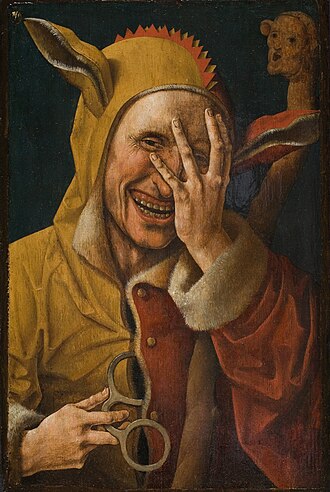
It won’t have escaped your notice that the 1st April is a day traditionally given over to playing tricks on friends and family.
Interestingly, in the first half of the 17th Century, it seems to have been unknown in the British Isles. There are no references to anything related to such pranks connected with April in plays or popular literature of the time. Indeed, it is not until well after the Restoration we hear it mentioned when in 1686, John Aubrey wrote: ‘Fooles holy day. We observe it on ye first of April. And so it is kept in Germany everywhere.’
However, even in Europe, the first certain mention of anything that might be April Fools is far from ancient. It is in a Flemish poem by one Eduard de Dene that dates from 1561.
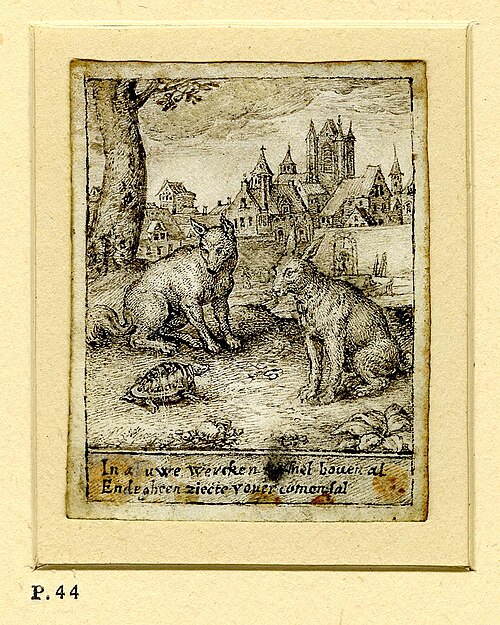
Born in 1505, de Dene had a good education and was appointed as notary to the local administrative area. He married well and had children and became secretary of the Bruges Rhetoricians’ Chamber of the Worthy Three Saints and apparently wrote quite a number of plays for the guild, but none have survived. We do have a book of fables written by him, an emblem book published in 1567. But despite an auspicious start in life, alcohol abuse took its toll, and de Dene wound up in prison for a time, with convictions for duelling as well as producing pamphlets. He wound up in debt with his house and contents auctioned off in 1558 to pay them, and six years later he was fired from his job. He died still in debt in 1576.
The poem which interest us by Eduard de Dene was written as part of his 25,000 word poem Testament Rhetorical which was unpublished in his lifetime. In the section called: Refereyn Vp verzenderkens dach Twelck den eersten April te zyne plach, a nobleman sends his servant on many spurious tasks on 1 April.
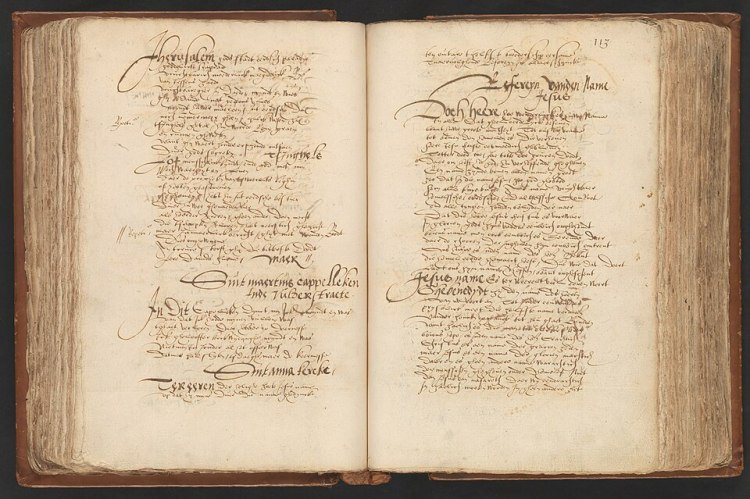
Ghent University Library – via Wikimedia Commons
The tasks include visiting a number of named towns and villages to find items of food and other things which the nobleman claims he needs for a wedding he is planning, and to invite guests. He tells the servant he must go to Dunkirk for rabbits, to Ostend for mustard, Bruges for mussels, Brabant for turnips and so forth. It was clearly much too far to travel in such a short time. His servant becomes suspicious and claims that as it is the 1st April he fears he is being sent on a fools errand, making him the first ever recorded such!
So while we may say with great confidence that the tradition was already known in the Southern Netherlands by 1561, no one is certain of the exact origins of April Fool’s Day.
There is one rather convincing theory though. It is very possible that it came about as a result of a calendar change that occurred in the 16th century when countries across Europe began moving the civil New Year’s Day from springtime to 1st January.
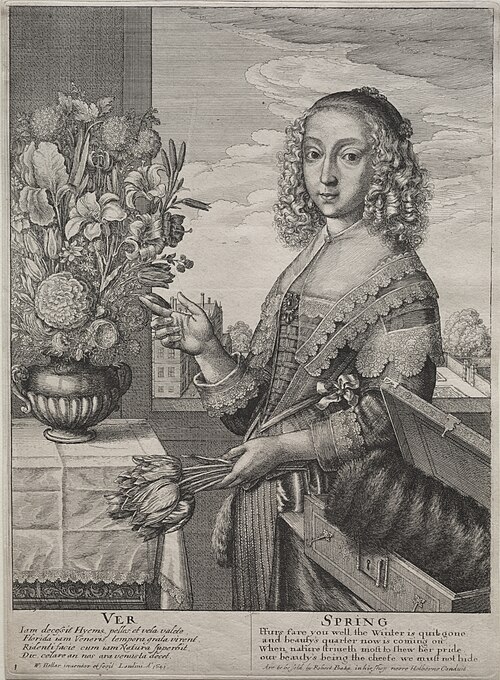
Wenceslaus Hollar (1607-1677)
Cleveland Museum of Art – via Wikimedia Commons
The Holy Roman Empire led the way by doing so in 1544. Before that, the year would begin in most European countries at the end of March (or for some even at Easter). We have the lingering echo of that today with the start of our financial year being 1st April. This is also why dates in the past are often expressed with two years, to show the difference between modern and contemporary dating, e.g. 1 March 1624/5.
The theory runs that those who were still thinking it was New Year’s Day on the springtime date when it had recently been celebrated but was no longer, were mocked, for it. Thus they became the original April Fools!
As the Holy Roman Empire was also often referred to as ‘Germany’ even at that time, it fits with Aubrey’s notion of its origin too. But whether this tempting theory is true or not, the lack of any mention of such a prank day on 1st April before the 16th century tells us that far from being an ancient practice, it is, in fact, most likely an Early Modern invention!
Eleanor Swift-Hook is the author of the Lord’s Legacy books set in the First English Civil War and the Lord’s Learning series of books, set in the 1620s and 1630s. Both series follow the adventures of the enigmatic mercenary commander and privateer, Philip Lord. Eleanor fell in love with the early Stuart era at university when she re-enacted battles and living history events with the English Civil War Society. Since then, she has had an ongoing fascination with the social, military and political events that unfolded during the Thirty Years’ War and the Wars of the Three Kingdoms. She lives in County Durham and loves writing stories woven into the historical backdrop of those dramatic times.
The picture at the top of this piece is Laughing Fool, c.1500, possibly by Jacob Cornelisz van Oostsanen (circa 1472/1477–1533). But fool though he may be, and much used as he is to illustrate discussions on the origins of the day, he was probably much too early to be an April one!
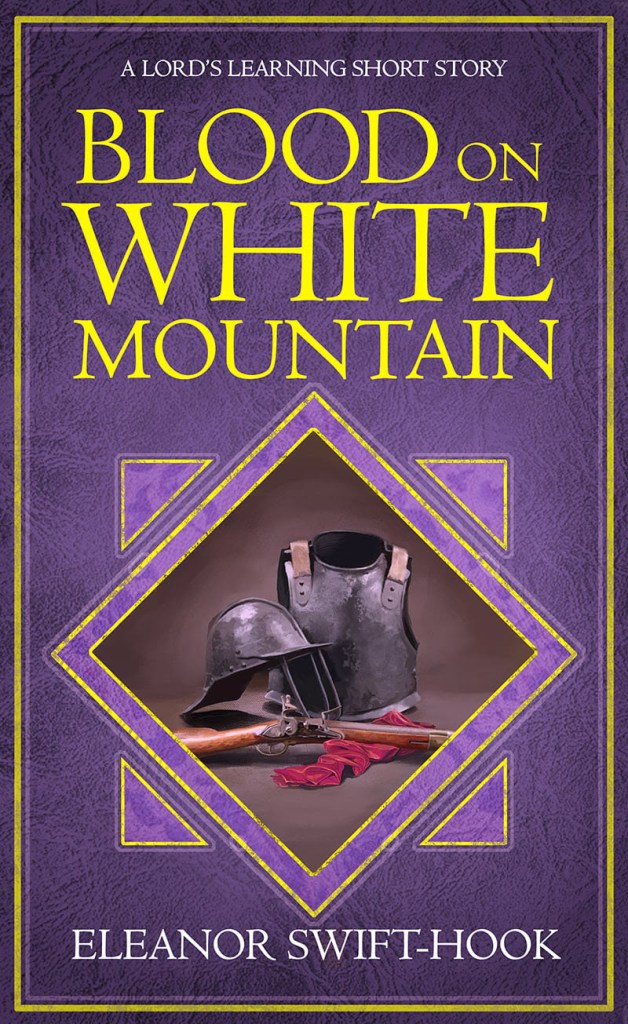
To be sure not to miss out on news about my current projects, you can sign up for my newsletter here and receive a free Lord’s Learning short story, Blood on White Mountain.
In 17th-Century Bohemia (modern Czechia), it was a given that the elected King of Bohemia would always be the Habsburg ruler of the Holy Roman Empire. But the emperor being a Catholic and most Bohemians being Protestants, the Bohemian parliament rejected the emperor’s rule. Instead, in 1619, they invited the leading Protestant prince of the empire, Elector Frederick V of the Palatinate and his wife Electress Elizabeth, who was daughter of King James of Great Britain, to become the King and Queen of Bohemia.
A year later an army was marching towards Prague, seeking to reclaim Bohemia for the emperor…
 Eleanor Swift-Hook