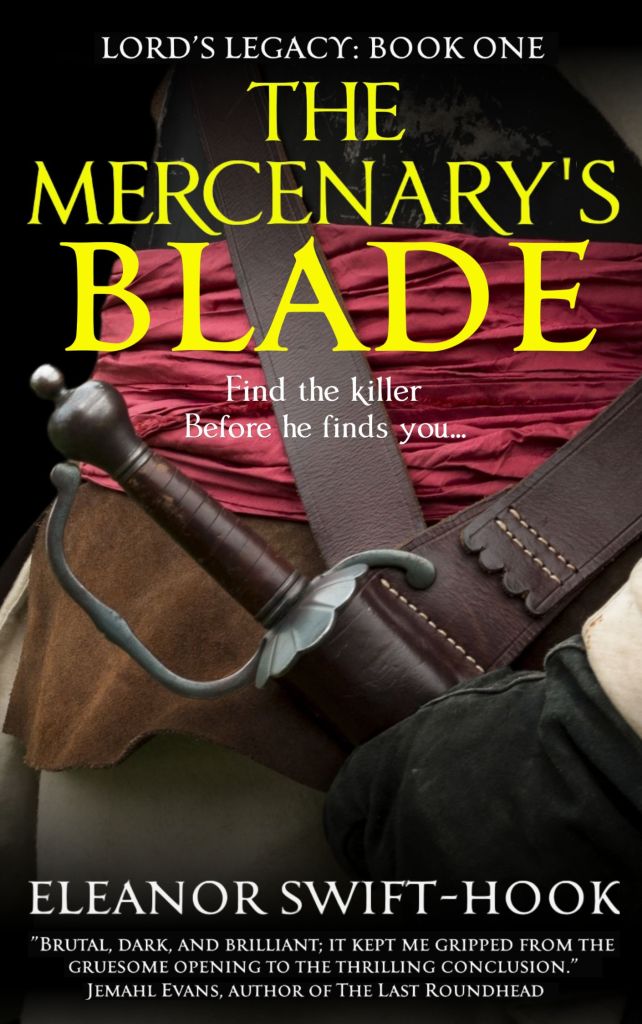
Weardale in County Durham is a truly beautiful place and one of England’s lesser known glories. Large parts of it fall within the North Pennines Area of Outstanding Natural Beauty. I would strongly recommend you visit should the opportunity arise, but should you be fortunate enough to do so you will find there is no Howe Hall, no abandoned fulling mill on the Wear and no village there called Pethridge, though traces of the lead mining that went on there can still be found.

Paul Walkinshaw on Pixabay
That admission made there is still much beyond the style of dress that is essentially historical in The Mercenary’s Blade.
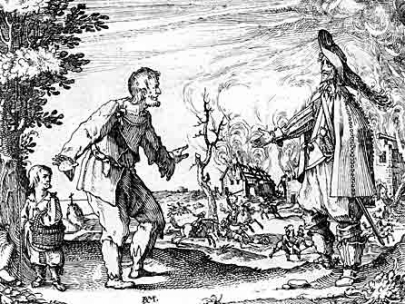
The start of the first English Civil War, officially marked by the king raising his standard, did indeed lead to the return of many Englishmen who had been fighting abroad in the Thirty Years War. To call them all ‘mercenaries’ as we would understand the term is misleading. They were men who made a profession of arms and whilst some were indeed more concerned with plunder than philosophy, most fought for pay but according to their conscience and indeed many were initially motivated by their beliefs to take up arms and fight in the continental wars.
However, there were still men who saw a career in arms as exactly that and placed profit ahead of all else.
Unknown author, Public domain, via Wikimedia Commons
Men like Carlo Fantom, a Croatian mercenary who started the war with Parliament, fighting under the Earl of Essex, who apparantly so valued his skill in training men he twice intervened to prevent him from being prosecuted for rape. In 1643 Fantom changed sides and joined the Royalists who were not so tolerant of his ways and not long after he was hung for rape. In Aubrey’s Brief Lives (our sole source for his existence) he is reported as saying: “I care not for your Cause: I come to fight for your halfe-crown, and your handsome woemen: my father was a R. Catholiq; and so was my grandfather. I have fought for the Christians against the Turkes; and for the Turkes against the Christians.”
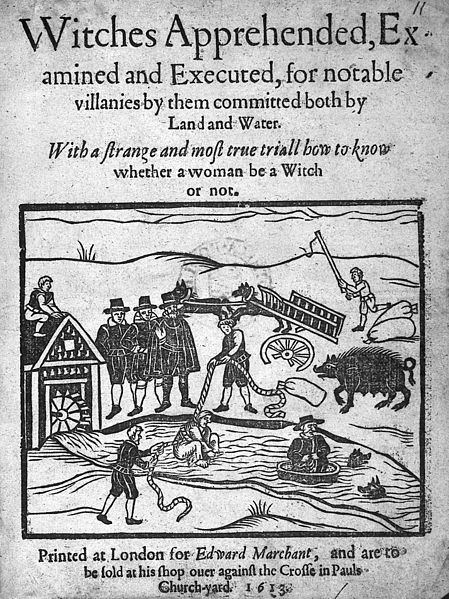
In this era the existence of the devil was regarded as an indisputable fact and witches were seen as the devil’s minions. Women were perceived to be spiritually and morally weaker than men and thus more likely to fall prey to the devil’s wiles. A woman alone was particularly vulnerable to such accusations.
Fortunately, there were many in authority who held great scepticism in any individual case of witchcraft, whilst not denying the existence of witches in principle.
Scepticism that had begun in the reign of King James, led by James himself. Following the case of the Lancashire Witches in 1634 when William Harvey and a team of physicians examined the accused and found them free of any sign of being witches, physical evidence was needed to condemn a witch. As a result, in the decade before the war it was much harder to procure a successful prosecution of any supposed witch.
Wellcome Images, CC BY 4.0, via Wikimedia Commons
Two years after the time this book is set, Matthew Hopkins would launch on his infamous career as self-appointed Witchfinder General. He was helped in his successful prosecutions by the breakdown of the judicial system which left local justices having to administer cases that would normally have gone to an assize court. But he was not the first to style himself a hunter of witches. Accusations of witchcraft were sometimes undoubtedly due to personal malice or hope of gain, perhaps even as often as they were born from fear, ignorance and superstition. There are known examples of people admitting they had been bribed to accuse another of being a witch.
If you are interested in learning more about how witchcraft was viewed at this time you can read my blog piece on the topic Daemonologie, Duplicity and Doubt: 17th Century Witchcraft Exposed.
 Eleanor Swift-Hook

