This is (I hope) a complete list of all the quotations – and some references made – in The Mercenary’s Blade, notable exceptions being the proverbs which Anders Jensen often uses. Where a quote or reference has been fully explained in the text it is not included here. Longer quotations I have only given the opening, or the first two lines of a song or poem. The quotations are listed in order of appearance.
The quotations in this book come from many sources of the period and earlier. Please note, unless otherwise stated, all Biblical quotations are taken from the King James Version.
Any mistakes in my attributions or missing quotations, please do let me know.
…and this the cranny is, right and sinister
From A Midsummer Night’s Dream by William Shakespeare Act 5, Scene 1.
I know, sir, what it is to kill a man; it works remorse of conscience in me. I take no pleasure to be murderous, nor care for blood when wine will quench my thirst.
From Tamburlaine the Great by Christopher Marlowe. Part Two Act Four Scene One
like the heath in the wilderness
Jeremiah 48:6 ‘Flee, save your lives, and be like the heath in the wilderness.’
I am a mighty melancholy,
And a quart of sack shall cure me…
Vandunk’s Four Humours, in Quality and Quantity by Richard Brathwait
Sir Percival—seeing without understanding what he sees.
Sir Percival is one of King Arthur’s knights. In Perceval ou le Conte du Graal by Chrétien de Troyes, Percival witnesses a strange procession but has no idea what it really means.

The original uploader was Archibald Tuttle at French Wikipedia., CC BY-SA 3.0, via Wikimedia Commons
From ghoulies and ghosties and long-leggedy beasties, and things that go bump in the night—Good Lord, deliver us.
A traditional Scottish prayer.
For I am formed from smokeless fire and named ‘The Whisperer’ amongst men.
In Islamic tradition, the djinn (powerful evil spirits) were formed of smokeless fire and ‘The Whisperer’ is another name for Iblis (Satan).
He that has pity upon the poor gives unto the Lord; and that which he has given will he pay him.
Proverbs 19:17
Item quilbet presumitur innocens nisi probetur nocens
Likewise, a person is presumed innocent unless proven guilty – First stated by French canonist, Johannes Monachus in the 14th century.
When thieves fall out, honest men come by their own.
A proverb
He that may lose the field,
Yet let him never yield…
From the song When Cannons Are Roaring, first referenced in James Shirley’s play Love Tricks in 1625.
And I will make thee beds of Roses,
And a thousand fragrant poesies…
From The Passionate Shepherd to his Love a poem by Christopher Marlowe
This is work for Hippocrates of Kos, not Corax of Syracuse
Hippocrates was the famous physician, Corax was one of the founders of rhetoric who aimed to help men present their case in court.
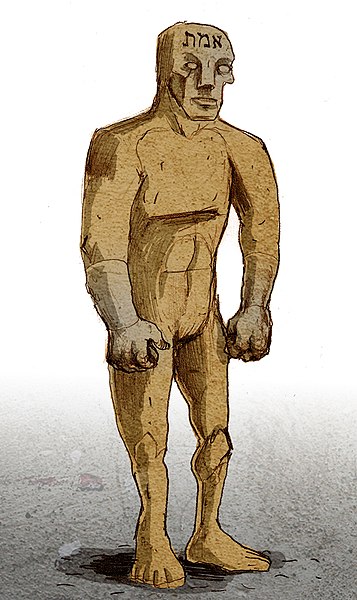
Do we need to take the aleph from the emet?
In Medieval Jewish legend, a golem was a creature of mud brought to life by writing the word for truth in Hebrew on its forehead which is emet. The first letter in emet is the Hebrew letter aleph in Hebrew. If removed, that would leave the word met which means death, and thus deactivate the golem.
Philippe Semeria, CC BY 3.0, via Wikimedia Commons
All shall be well, and all shall be well and all manner of things shall be well.
From Revelations of Divine Love by Juliana of Norwich
Doubt thou the stars are fire,
Doubt that the sun doth move…
From Hamlet by William Shakespeare, Act Two, Scene Two
There is dew on the fleece and there is dew not on the fleece—here, Jerubaal…
Jerubaal was a name of Gideon in the Bible. The tale of how Gideon met an angel and tested God by asking for dew to appear on a fleece for one night and then not on the fleece the next night, can be found in Judges Chapter Six.
And almost all things are by the law purged with blood; and without shedding of blood is no remission.
Hebrews 9:22
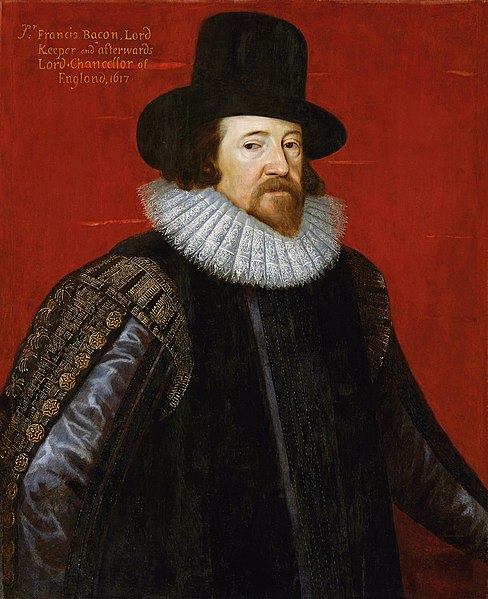
Revenge is a kind of wild Justice; which the more Man’s nature runs to, the more ought the Law to weed it out.
From Revenge one of The Essays of Francis Bacon found in the 1625 edition.
And that which ye have spoken in the ear in closets shall be proclaimed upon the housetops.
Luke 12:3
The duty was allotted, mad as I am, to me.
From The Divan, Part CI a poem by the Sufi poet Hafiz c. 1370 CE

میرزا علینقی شیرازی, Public domain, via Wikimedia Commons
Your heart knows the way. Run in that direction.
Attributed to the 13th-century Persian poet and Sufi mystic Jalal al-Din Muḥammad Rumī
Thou shalt not kill.
Exodus 20:13
We few, we happy few, we band of brothers;
For he to-day that sheds his blood with me…
From The Life of King Henry the Fifth by William Shakespeare Act Four, Scene Three
There’s time to speake much, time as much to sleepe.
From George Chapman’s 1611 translation of The Iliad of Homer
cadit quaestio
Literally ‘the question falls’ – a legal phrase used to indicate that a dispute between two parties has been resolved or dropped
dura lex sed lex
The law is harsh but it is the law
ex post facto
Literally ‘after the fact’ – refers to a change in the law that thus changes the legality of a prior event.
Prepare for deeds; let other times have words.
From The Revenger by Thomas Middleton, Act Five, Scene Two
Abroad the sword bereaveth, at home there is as death.
Lamentations 1:20
Thou shalt not bear false witness against thy neighbour.
Exodus 20:16
A man that beareth false witness against his neighbour is a maul, and a sword, and a sharp arrow
Proverbs 25:18
Sith that no greater joy there can be had, Then to restore thy selfe unto thy blood.
From The Life and Death of Hector by Thomas Heywood. Printed by Thomas Purfoot, Anno. Dom. 1614
We are no longer Utopians for we have a lawyer among us—pay heed in case matters are disguised and laws wrested in crafty ways.
A reference to Thomas More’s Utopia: ‘They have no lawyers among them, for they consider them as a sort of people whose profession it is to disguise matters and to wrest the laws‘ There are other references to Utopia which follow.
A trade not for gold, silver, or jewels; nor for silks; nor for spices; nor any other commodity of matter
From The New Atlantis by Francis Bacon
Paul van Somer I, Public domain, via Wikimedia Commons
Blood will to blood be kind.
From The Life and Death of Hector by Thomas Heywood. Printed by Thomas Purfoot, Anno. Dom. 1614
Company with honesty, is virtue vices to flee:
Company is good and ill but every man hath his free will…
From the song Pastime with Good Company by King Henry VIII
And behold a ladder set up on the earth, and the top of it reached to heaven and behold the angels of God ascending and descending on it.
Genesis 28:12
Who hath not knowne or herd how we were made a feard that magre of our beard our messe shulde cleane awaye.
From The Upcheringe of the Messe a poem by Luke Shepherd
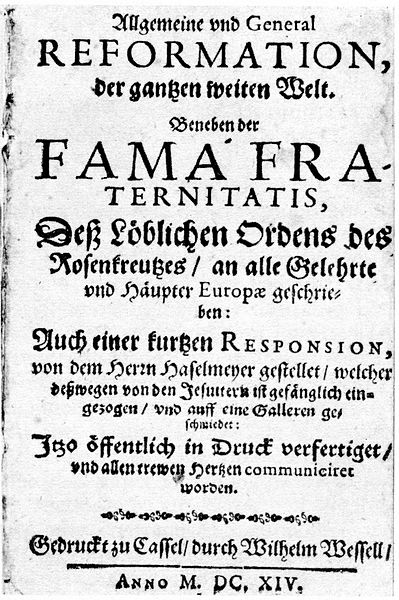
The tomb of Christian Rosenkreuz
The first Rosicrucian pamphlet, known as Fama Fraternitatis and published in 1614, described the tomb of Christian Rosenkreutz and spoke of a new religious age beginning when it might be rediscovered.
Johann Valentin Andreae, Public domain, via Wikimedia Commons
Most welcome, bondage, for thou art away, think, to liberty
From Cymbeline by William Shakespeare, Act Five, Scene Four.
Two are better than one because they have a good reward for their labour.
Ecclesiastes 4:9
Homo proponit, sed Deus disponit
‘Man proposes, but God disposes’ from The Imitation of Christ by Thomas à Kempis, Book One, Chapter Nineteen.
A thing most brutish… therefore wast thou deservedly confined into this rock, who hadst deserved more than a prison.
From The Tempest by William Shakespeare, Act One, Scene Two
We are such stuff as dreams are made on, and our little life is rounded with a sleep.
From The Tempest by William Shakespeare, Act Four, Scene One
 Eleanor Swift-Hook


.jpg)

