It won’t have escaped your notice that the 1st April is a day traditionally given over to playing tricks on friends and family.
Interestingly, in the first half of the 17th Century, it seems to have been unknown in the British Isles. There are no references to anything related to such pranks connected with April in plays or popular literature of the time. Indeed, it is not until well after the Restoration we hear it mentioned when in 1686, John Aubrey wrote: ‘Fooles holy day. We observe it on ye first of April. And so it is kept in Germany everywhere.’
However, even in Europe, the first certain mention of anything that might be April Fools is far from ancient. It is in a Flemish poem by one Eduard de Dene that dates from 1561.
A hare, a fox and a tortoise, one of twelve illustrations of Fables, by Marcus Gheeraerts the Elder in De Warachtighe fabulen der dieren by Eduwaert de Dene, published in brown ink on vellum at Bruges in 1567, presently in the British Museum via Wikimedia Commons
Born in 1505, de Dene had a good education and was appointed as notary to the local administrative area. He married well and had children and became secretary of the Bruges Rhetoricians’ Chamber of the Worthy Three Saints and apparently wrote quite a number of plays for the guild, but none have survived. We do have a book of fables written by him, an emblem book published in 1567. But despite an auspicious start in life, alcohol abuse took its toll, and de Dene wound up in prison for a time, with convictions for duelling as well as producing pamphlets. He wound up in debt with his house and contents auctioned off in 1558 to pay them, and six years later he was fired from his job. He died still in debt in 1576.
The poem which interest us by Eduard de Dene was written as part of his 25,000 word poem Testament Rhetorical which was completed in 1561 but remained unpublished in his lifetime. In the section called: Refereyn Vp verzenderkens dach Twelck den eersten April te zyne plach, a nobleman sends his servant on many spurious tasks on 1 April.
Fragment of the Testament Rhetoricael by Eduard de Dene, 1561 Ghent University Library – via Wikimedia Commons
The tasks include visiting a number of named towns and villages to find items of food and other things which the nobleman claims he needs for a wedding he is planning, and to invite guests. He tells the servant he must go to Dunkirk for rabbits, to Ostend for mustard, Bruges for mussels, Brabant for turnips and so forth. It was clearly much too far to travel in such a short time. His servant becomes suspicious and claims that as it is the 1st April he fears he is being sent on a fools errand, making him the first ever recorded such!
So while we may say with great confidence that the tradition was already known in the Southern Netherlands by 1561, no one is certain of the exact origins of April Fool’s Day.
There is one rather convincing theory though. It is very possible that it came about as a result of a calendar change that occurred in the 16th century when countries across Europe began moving the civil New Year’s Day from springtime to 1st January.
The Four Seasons: Spring, 1641 Wenceslaus Hollar (1607-1677) Cleveland Museum of Art – via Wikimedia Commons
The Holy Roman Empire led the way by doing so in 1544. Before that, the year would begin in most European countries at the end of March (or for some even at Easter). We have the lingering echo of that today with the start of our financial year being 1st April. This is also why dates in the past are often expressed with two years, to show the difference between modern and contemporary dating, e.g. 1 March 1624/5.
The theory runs that those who were still thinking it was New Year’s Day on the springtime date when it had recently been celebrated but was no longer, were mocked, for it. Thus they became the original April Fools!
As the Holy Roman Empire was also often referred to as ‘Germany’ even at that time, it fits with Aubrey’s notion of its origin too. But whether this tempting theory is true or not, the lack of any mention of such a prank day on 1st April before the 16th century tells us that far from being an ancient practice, it is, in fact, most likely an Early Modern invention!
Eleanor Swift-Hook is the author of the Lord’s Legacy books set in the First English Civil War and the Lord’s Learning series of books, set in the 1620s and 1630s. Both series follow the adventures of the enigmatic mercenary commander and privateer, Philip Lord. Eleanor fell in love with the early Stuart era at university when she re-enacted battles and living history events with the English Civil War Society. Since then, she has had an ongoing fascination with the social, military and political events that unfolded during the Thirty Years’ War and the Wars of the Three Kingdoms. She lives in County Durham and loves writing stories woven into the historical backdrop of those dramatic times.
The picture at the top of this piece is Laughing Fool, c.1500, possibly by Jacob Cornelisz van Oostsanen (circa 1472/1477–1533). But fool though he may be, and much used as he is to illustrate discussions on the origins of the day, he was probably much too early to be an April one!
To be sure not to miss out on news about my current projects, you can sign up for my newsletter here and receive a free Lord’s Learning short story, Blood on White Mountain.
In 17th-Century Bohemia (modern Czechia), it was a given that the elected King of Bohemia would always be the Habsburg ruler of the Holy Roman Empire. But the emperor being a Catholic and most Bohemians being Protestants, the Bohemian parliament rejected the emperor’s rule. Instead, in 1619, they invited the leading Protestant prince of the empire, Elector Frederick V of the Palatinate and his wife Electress Elizabeth, who was daughter of King James of Great Britain, to become the King and Queen of Bohemia.
A year later an army was marching towards Prague, seeking to reclaim Bohemia for the emperor…
When I was looking into having The Fugitive’s Sword made into an audiobook, I knew it needed a narrator who was sympathetic to the period and that was a pretty big ask. So when I learned that Andrea Zuvich – better known on social media as ‘The 17th century Lady’ – was an audiobook narrator, it was very much a matter of serendipity! Andrea is a specialist in the Stuart era and has written several books about the Stuarts herself. She and her husband, Gavin, work as a team, narrating and producing audiobooks. She has done an amazing job on The Fugitive’s Sword, bringing it to life, so I was very keen to seize the opportunity to ask Andrea about her work on the book and how she approached it.
For most of us, audiobook production is an esoteric matter. Could I begin by asking you to share some brief insight into the kind of thing it involves? What are the most difficult aspects of audiobook production to get right? Do you have a routine for preparing to read?
Yes, many people are under the impression that narrating is the same as reading aloud, but it’s not. I read aloud to my daughter every night, but I don’t have to worry about my voice being crackly with a cold, or if I don’t pronounce something correctly. I can make mistakes, and it’s fine. But with audiobook narration, the microphone picks up everything, so we use a noise gate – which can often take out breaths, etc. It’s all very technical to me but my husband does the bulk of the work in the editing.
The Fugitive’s Sword in production – photo Andrea Zuvich “It may seem as though a narrator simply reads a book, but no. I rehearse, research words and pronunciations, and we have to watch for mouth noises, etc, and the post production (editing, retakes) can be 3 times the time it takes to record.”
I rehearse the chapter aloud at least once before we record, but even then, mistakes can happen. If I mess up, I can repeat the line and this gets corrected by the editor/sound engineer. There is an initial edit session by Gavin, and then I listen to the whole track (chapter) and any pops or clicks in my speech, any mistakes in my reading, get flagged up and we do re-takes and then another listen through. An 8-hour audiobook is usually around 50 hours of work for us, all said and done.
Your audiobook narration is a performance art and you bring many elements to it. How did you develop those impressive performance skills?
Thank you very much! I’ve been drawn to performance for as long as I’ve wanted to be a historian – so since I was about six or so! I took a lot of drama, acting, foreign languages, choir, and TV & radio courses and I also performed in many plays and some films during my teens, and I had to use various accents and so I think that all helped.
You sing some of the songs! I know you are a singer of early modern pieces, were any of them songs you already knew? Did they take a lot of rehearsal? Which was your favourite of those you sung?
A 17th Century pamphlet version of Mary Ambree – Wikipedia
Yes, I love singing and it was a treat to be able to perform some Early Modern pieces during the course of the narration of this book. I don’t want to give anything away, but one of the main characters, Kate, sings a song, Mary Ambree, in a scene of great turmoil and it gets repeated later and I think it’s such a lovely melody and one that can stay in your head – in a good way! I didn’t know the Dutch song, so I had to look that one up and practice that one many times before recording it. It’s such fun to include songs!
I was particularly impressed by the way you were able to give each character their own voice. Do you read the character’s part in the book to yourself a few times before doing the official reading to better understand each one when bringing their voice to life, or do you find the voice suggests itself at first reading?
I read the book twice – the first time was a straightforward read to see what happens, the second time was with meticulous notes about age, place of origin, and any characterisation. I made a list of the characters and put their ages, social level, place of origin, etc. and that helps form my characterisation. I got in touch with you several times to ask your opinion and preference on things and I think it really helps to have communication with the author.
Did you do any research beyond the book to find out how specific characters might have spoken?
Yes, I like doing my research! I looked into alum, the Siege of Breda, and some words I was uncertain about with pronunciation. There are fantastic accounts on YouTube which have native speakers pronouncing words. This helped me out a lot.
Did you find you needed to get into character to read from their perspective and do you have a process for doing so?
Your characters are so well-described that I was able to form an idea of what they sounded like based on that and that helps the whole process. Sometimes an author leaves their characters vague and to perform that can be trickier without more detail. But before I record, if there are different characters in a given scene, I highlight the different characters with different colours so I remember which accent is which.
Andrea at work – photo Andrea Zuvich
For me, the way you can so smoothly switch between voices in dialogue, usually with participants who have very different specific accents, was most impressive, what did you find most difficult when dealing with mixing accents in a single conversation?
Thanks! I’ve always loved accents – my parents are from Chile and my father worked as a translator for many years, and speaks nine languages, so I grew up listening to a wide variety of foreign languages and accents. The Spanish characters, in particular, were easiest for me as my Mother Tongue is Spanish, so I’ve grown up with accents like that. I’ve had experience with dialogue between characters from different countries – I gave myself a hard time in one scene of my own book, The Stuart Vampire, in which accents were used in a conversation involving several very different characters. For The Fugitive’s Sword, I had a similar challenge as I needed to up my game with the array of accents and characters, some characters not seen again until the end of the book, but I like a challenge and so I think that was most enjoyable for me.
Was your favourite character to voice the same as your favourite character in the story and what was it about each of them that led to you feeling that way?
I really liked Jorrit – and felt very protective of him. I saw him as a very young boy who has a very childlike voice in the beginning and I made a conscience decision to change his voice slightly as he goes through a variety of experiences that bring increasing maturity to him. As for the Schiavono, he reminded me of swashbuckling heroes from the Golden Age of Hollywood and characters like Percy in The Scarlet Pimpernel, so I envisaged him in that way and I always found him a fun character to voice.
‘Sing with me’ by Ian Bristow – showing Kate and Jorrit in a scene from The Fugitive’s Sword
Which character did you dislike most as an individual – did they present you with any challenges when voicing them as a result?
There are different unsavoury characters that turn up throughout the book, and it’s always fun to play a baddie. In terms of a specific character, I didn’t really like a certain Captain, which readers will probably understand. I tried to make his voice grow more menacing as the story unfolded – hopefully I managed to do that!
What did you most enjoy about working on The Fugitive’s Sword?
It’s such a thrill to work on a story set in the seventeenth century – you know how much I adore that period. It’s also wonderful to be able to bring to life this work by an author who is so beloved by readers and colleagues alike. I really hope listeners enjoy the audiobook. Thank you for this opportunity!
Thank you so much for drawing back the curtain on how you went about bringing The Fugitive’s Sword to life. I am so happy to be able to share your wonderful production of the book with all those who already love following Philip Lord’s adventures, and with those who are audiobook fans and will come to discover him through this.
The Fugitive’s Sword is now available as an audiobook through Audible. It is narrated by Andrea Zuvich, produced by Gavin Orland, cover designed by Ian Bristow, and theme music composed and performed by Earth Forge.
A seventeenth-century historian and author in her own right, Andrea Zuvich also has more than a decade of acting experience, performing such roles as Queen Gertrude in Hamlet, Isabella in The Spanish Tragedy, Hermia in A Midsummer Night’s Dream, Frenchy in Grease, and Blanche DuBois in A Streetcar Named Desire, among others. She has appeared on the BBC, NBC, NTR and other networks and narrated several books in a wide variety of genres, including Eat Like a Local: Malaga Spain Food Guide (2022), Her Perfect Scoundrel (2022), So Little Done: The Testament of a Serial Killer (2023), and The Apprentice: Love and Scandal in the Kingdom of Naples (2023). She has also voiced media for several mobile apps and is a singer of early music and opera. Andrea is author of several books on the period including ‘Sex and Sexuality in Stuart Britain‘ and Ravenous: A Life of Barbara Villiers, Charles II’s Most Infamous Mistress. Host of ‘Stuart Saturday Live‘, and a co-founder (with Dr Erica Canela and Mark Turnbull) of the Stuart History Festival, the world’s first-ever in-person festival dedicated to Stuart history.
Finally,if you enjoyed the theme music, you might like to hear the full piece of music from which it is taken, The Shadow of Treason, illustrated on YouTube with paintings depicting characters and events from Lord’s Learning and Lord’s Legacy.
Any biography of a major seventeenth-century figure that receives praise from two such giants in the field as Professor Ronald Hutton and Professor Nadine Akkerman has to be something a bit special. Prince Rupert has always been a divisive individual. Even on the day he was born, half the Bohemian Estates wanted to vote him as heir to their throne, and half didn’t. He reached the apogee of his fame during the First English Civil War, when he was seen as an inspiring hero by those who supported his uncle, King Charles I, and was cast as a vile, possibly demonic, foreign mercenary by his enemies. Which was rather ironic. In that most religiously motivated of wars, Rupert’s strong Calvinist faith (something he had been so staunch in that he had endured years as a prisoner of war rather than abandon it) was much closer to the creed Parliament professed than his uncle’s Laudism.
Frontispiece of the Parliamentarian pamphlet A true relation of Prince Rupert’s barbarous cruelty against the towne of Brumingham showing Prince Rupert attacking Birmingham during the Battle of Birmingham in 1643. Wikimedia Commons.
For a generation, the image of Rupert as Timothy Dalton with a lap dog tucked up on his saddle in the film ‘Cromwell’ influenced how the prince was perceived. But just as Cromwell was not one of the five MPs the king tried to arrest, as that film falsely claimed, so Rupert was not a pretentious fop, and Boye was not a small ball of fluff but a full-sized and highly trained hunting dog. Today, there are those who are Rupert’s unstinting admirers, and there are those who like to cast him as no better than an aristocratic thug. The heat of emotion on both sides tends to obscure the reality and leaves us with the same two-dimensional hero or villain stereotype he was depicted as during those brutal and divisive wars. And of course, the truth is nothing like that simple. Just as much as any other human being, Rupert was complex and deserves better than to be pigeon-holed in one box or another. Beginning with Rupert’s birth in Prague, at the epicentre of events which exploded into the Thirty Years’ War, this biography takes the reader through what is known of the prince’s education as one of a large and growing family of children born to the exiled Elector Palatine and his wife, the Winter King and Queen. For half a decade, his mother was heir to the English throne, and she held the devotion of many Englishmen who saw her cause as their own. A devotion which made them demand that King Charles support her cause. But they were not quite devoted enough to vote the kind of money that support required on an ongoing basis, whilst at the same time chastising the king volubly for failing to do so.
Of necessity as well as inclination, Rupert was raised to be a soldier, and Mark Turnbull looks at new evidence of how the prince developed his skills as a military commander and the consequences of that. He was fighting in his family’s cause from his teens. So, even despite their religious differences, it is not surprising that he was quick to support his uncle when the English Parliament declared war against him and raised an army to try and force the king to their will. Indeed, had it not been for Rupert, there might not have been an adequate military response in time. His deeds of daring – or despoilation, depending on the perspective taken – in the First English Civil War are well known, but the biography brings some new insights to this part of Rupert’s life, especially around his conduct of the Battle of Marston Moor and his relationship with the king. What is much less well known is that after the king’s defeat, Rupert took to the seas and for some years became pretty much a pirate working for the Royalist cause.
Prince Rupert. Studio of Sir Peter Lely, oil on canvas, circa 1670. Wikimedia Commons
After the Restoration, Rupert was a major figure in the court of Charles II, involving himself in culture, art, science and trade as well as continuing his military role as a naval commander. But it is this last phase of Rupert’s life, so often seen as almost irrelevant compared to his early fame, that this biography illuminates particularly well, and adds to through looking closely at the women he shared his life with. We are shown Rupert as a family man, which is something usually glossed over and diminished. His chosen life partner is generally cast as a mere mistress, as if she were no one of any real significance in his life, when in truth, his devotion to her and their daughter was central to who he was in his later years. It has been almost twenty years since there has been a new biography of the prince, so in many ways this is a long overdue reappraisal of his life. As well as including the latest published research, Mark Turnbull has gone back to the archives and looked with fresh eyes at the documents available, and even decoded some letters for probably the first time. He also brings a modern approach to the biography, seeing Prince Rupert in the round, significant for being a man of his time rather than just for his impact on events. So, as well as showing the familiar Rupert striding out on the stage of history, this book also explores the private man, his personal relationships with family and friends, and the women with whom he was intimate.
This is not a hagiography of the warrior prince; this is – as Professor Akkerman says – ‘a fresh and balanced’ approach to the life of a man who even today gathers both ardent supporters and passionate detractors. There have been several excellent modern biographies of Prince Rupert, mostly highlighting his career as a commander on land and at sea: Morrah, Thompson, Kitson, Spencer – I’ve read them all, and they paint a collective portrait of the prince which fits very well with the formal paintings we have of him. In this new biography, Mark Turnbull does that too, but he does something else as well. He shows us the prince as a man, with all the strengths and weaknesses of the human condition, with family, friends and lovers, with principles, passions, hopes and regrets. And that is something quite remarkable.
Prince Rupert of the Rhine – King Charles I’s Cavalier Commander is available to purchase directly from the publisher, Pen and Sword, and from other retailers, including Amazon.
After a visit to Helmsley Castle at the age of 10, Mark Turnbull bought a pack of ‘top trump’ cards featuring the monarchs of England. The card portraying King Charles I fascinated him. Van Dyck’s regal portrait of the King and the fact that he was executed by his own people were the beginnings of Mark’s passionate interest in the English Civil War that has lasted ever since. He thoroughly enjoys bringing this period to life through writing, having written articles for magazines, local newspapers and online educational sites, and used to re-enact battles with The Sealed Knot. Mark is an Associate Fellow of the Royal Historical Society. He also produces a War of the Three Kingdoms podcast called ‘CavalierCast – The Civil War in Words’. This was the first (and is the longest running) podcast solely dedicated to the civil wars. It explores a variety of topics with leading historians and authors. He is also the author of another biography, Charles I’s Private Life and The Rebellion Series, historical fiction set in the civil wars. He is one of the co-founders (with Dr Erica Canela and Andrea Zuvich) of the Stuart History Festival, the world’s first-ever festival dedicated to Stuart history. You can follow Mark on X(Twitter) and Facebook.
Paula Lofting has a new book out Searching for the Last Anglo-Saxon King, Harold Godwinson, England’s Golden Warrior. I always find it fascinating to see the similarities there can be between eras and asked her some questions about the ways in which events in 11th Century England can be compared (and contrasted) with those in the 17th century, and Harold can be compared with Charles I.
***************************************
I know very little about the Anglo-Saxon Era and the Norman Conquest, except what every schoolchild learns about it, but it strikes me there are a number of points where it has some interesting congruence with the First English Civil War. As Tostig was Harold’s brother, were there aspects of Harold’s fight for the crown which were in a sense a civil war or was it entirely about fighting foreign invaders?
So, there’s no real evidence that Harold had his eye on the crown until January 1066 when Edward died, and he was suddenly proclaimed king. Here is a brief potted history of what led to his ascendancy to the crown: – August 1065 – Tostig rules as Earl in the north. The leading chieftains decide they have had enough of his rule. They claimed he had committed crimes against them. They marched on his HQ in York where they killed 200 of his huscarls. Luckily for Tostig, he was in the south with the king, hunting. – The protest didn’t end there. The rebels wanted to oust Tostig and replace him with the younger brother of Earl Edwin of Mercia, Morcar. Both these young men were the sons of the deceased Alfgar, who was a rival of the Godwinsons. – The Northumbrians and Yorkshiremen called Morcar to them, and they planned to head south to Tostig’s lands in Northampton gathering an army through the lands of shires on the way, meeting up with Edwin, Morcar’s brother at Northampton, bringing his Mercians and also a large number of Welshmen too. – When word got through to Tostig and the king what was going on, Tostig demanded that Harold go to parley with them and sort out the mess, but the leaders of the rebel army refused to compromise. They were adamant that Tostig needed to go because of the charges against him and wanted the king to gird Morcar as their earl. – Harold was in a difficult position. As second to no one but the king, his job was to do the king’s bidding, and the king wanted him to use force to reinstate Tostig. Harold was faced with choosing between creating a civil war or betraying his brother and going against his king. If he chose civil war, there would be enormous bloodshed between which the south had no stomach for anyway, and if he chose to accept the conditions laid out by the rebels, he risked losing the respect of the court, his family, the king and his brother. He chose to put the country before his king and blood. – The king was backed into a corner and had to agree to the rebel’s demands. It was unlikely that the leading thegns, in the south wanted to go to war with the north anyway, so this also added to Harold’s dilemma. In any case, civil war would have only served to leave England open to invasion. Whilst the king was thinking with his heart, Harold was thinking with his brain and the preservation of his country, and the safety of his people was more important. –Tostig and his wife had to leave and went into exile in Flanders, to her brother who gave them refuge. Tostig got himself together with the King of Norway, Harald Hardrada, to set the Norwegian king on the English throne. Bent on revenge, he set about planning his invasion with his ally.
The Battle of Stamford Bridge, from The Life of King Edward the Confessor by Matthew Paris. 13th century. Cambridge, Cambridge University Library, MS Ee.3.59, f. 32v; MS produced c. 1250-60 – via Wikimedia
– Sadly for Tostig, Harold was to defeat him at Stamford Bridge and his hopes of reinstatement in England as Hardrada’s deputy were wiped out in one day’s battle. Both men were killed by the English forces. So you see, it was not civil war that tore the brothers apart but their inability to work together on this crisis. Tostig accused Harold of orchestrating his downfall, however I don’t believe that was the case. I think there may have been jealousy between them which had festered. After all, they had worked together very well after their successful invasion of Wales in 1063. Something had possibly gone wrong between them, but it is difficult to know, but there is evidence that they had become rivals. The mysterious destruction of the hunting lodge Harold was building for King Edward may have played a part in their schism.
I notice that Charles I was descended from Harold. Harold’s grandson (through his daughter, Gytha) was Mstislav I, Grand Prince of Kiev and by separate lines of descent, Mstilav was an ancestor to both James I and Anna of Denmark. So I was wondering how important was descent in legitimising kingship in Anglo-Saxon culture?
A 17th Century representation of Cerdic of Wessex John Speed’s Saxon Heptarchy map, from his Theatre of the Empire of Great Britain, 1611 – via Wikimedia
It was generally believed that if you were the son of a king from the line of Cerdic of Wessex, you were entitled to be addressed as ætheling, meaning of the noble family, therefore one would be ‘throneworthy’. This did not necessarily mean that the eldest son would automatically take the throne. It was the king’s privilege to nominate his designated heir, but ultimately it was down to the witan (the king’s council) to cast their vote as to who they would accept as king. So we might have a situation where the king nominates his eldest son from his first marriage, but a rival faction might support a younger son from his second marriage or, as in the case of Cnut, a son from an unofficial marriage. It would be up to the witan, to choose who they believed was the strongest candidate who would lead the country well. In Harold’s case, having no known connection to the House of Wessex, but his status as sub regulas (underking) overrode the claim of young Ætheling Edgar due to his seniority, strength, and power.
Thinking of kingship, in 17th-century England, the notion of Divine Right had evolved. This was the idea that God had chosen and appointed the king and given him full authority to rule. This was not a licence to do what he wanted, but a responsibility for the well-being of his kingdom and its people, for which he would be held to account by God. Is this at all similar to the concept of his kingship that Harold held?
Harold crowned by Archibishop of Canterbury Stigand From the Bayeux Tapestry via Wikimedia
I would say definitely, kings were crowned and anointed with holy oil from the days of Edgar, who was the first to be referred to as King of England. This was taken from the bible as many kings or chosen prophets were anointed with oil recognising their divine appointment from God. As with the 17th century, the early English kings were not given licence to do as they pleased. They had to rule with the permission of the witan but had ultimate authority to make decisions that affected the kingdom. He was responsible for the safety and security of his kingdom, and I suspect he knew that it was his duty to be accountable to God for his governance of the realm. Harold did his best to see to the safety of the kingdom, and even as earl of Wessex, he was given the authority to make decisions on Edward’s behalf, being sub regulas and dux Anglorum. These gave him the ability to make both kingly and military decisions. During his short reign, Harold was to spend it securing England’s shores with naval and military might. He had to ally himself with the difficult northerners by marrying the sister of Edwin and Morcar. He then had to march north at lightning speed to fight the might of his brother and Hardrada then did the same back south to face William of Normandy. Harold took his duties seriously. Because the Normans were assaulting his lands, burning homesteads, and killing his people, he refused to let his brother, Gyrth, fight on his behalf whilst he waited for the rest of the fyrd to catch up in London. He was angry and infuriated at what was happening in Sussex and he marched with less than his army than he could have had to face William to stop the invaders in their tracks. Unfortunately, his efforts were in vain.
Charles I was in conflict with his parliament long before the outbreak of civil war. What was the nature of the ‘parliament’ Harold had to contend with, and what kind of issues did they cause him?
Drawing of Old Testament king and his court from the 11th-century. Old English Hexateuch, from the Cotton library at the British Museum via Wikimedia
The parliament was the Witanegemót, the meeting of wise men, which was made up of nobles, earls, archbishops and bishops and other important people. The function of the body of the Witan was to advise the king, assist with law-making. As said previously the king had the ultimate power so didn’t have to act on what the witan suggested, however in Edward’s case he was often given little choice as the earls in the 11thc had great power and were able to overpower Edward’s decision, as we see when he wanted Harold to gather the southern fyrd to force the north into obeying his command to reinstate Tostig Godwinson in his position as earl of Northumbria. When Edward died, he appeared to have most of the witan supporting him into the kingship. However not all of the earls had given their oaths. Edwin and Morcar, who ran the northern parts of England, had left court before giving their fealty to their new king. After Harold had his coronation, and had seen to some admin and the security of his shores in case William was to invade, he set off up north to York to treat with the young earls and in return for their support, he married their sister Aldith as previously mentioned.
Yorkshire is a place that held great significance to the fortunes of both kings. For Harold it was winning a battle there, at Stamford Bridge to defeat his brother Tostig and the invading Harald Hardrada. For Charles I, although very much a place of strength early in the war, it became the site of the first major defeat for his cause at Marston Moor, a loss that ultimately led to the greater defeat at Naseby the following year. Do you think Harold’s Yorkshire victory contributed to his defeat at Hastings?
Mitchell and Jessica Lawrence of Regia Anglorum portrayal of Harold and Eadgifu Swanneck – photo Paula Lofting
It definitely had a part to play in Harold’s well-being. It was a stressful time. The relationship between himself and his brother was fractured, which may have affected his relationship with his sister, the queen and the king, for they were excruciatingly fond of Tosti. He’d had to bring north and south together by entering into a marriage he may not have really wanted. He already had a wife, Eadgifu – also known as Edith – Swanneck. She was his more Danico wife, a type of marriage that was not blessed by the church, but legitimate in the eyes of the law, nonetheless. Harold may have always known that one day he might have to ally himself in order to keep peace in the land, but he had evaded it for more than twenty years, which suggests the marriage between himself and Eadgifu was a faithful and loving union. It cannot have been easy to reject her for another. Harold had to live up to his duty of kingship, keeping his people safe. He organized his armies and lined his shores in Sussex and Kent with men and naval forces. However, he miscalculated when he disbanded the fyrd in September because he thought that William would by that time have called off his invasion. He thought he was able to march north to fight his brother and Hardrada without leaving his lands properly defended – but how wrong he was. And when he heard after a hard-won victory against the Norwegians, that William had landed in Pevensey and was ravaging his lands, he had to abandon his plans to reorganise the militia in York and divi up the booty they had taken from the defeated Vikings to march south and face William at Hastings within a few weeks. No doubt all this would have an effect on his mind and body and may have upset his decision-making processes. It is a myth to think that the same body of army was the one that went up to Stamford Bridge and back to London. The elite huscarls – his personal bodyguard – would have likely to have been with him forward and back, as long as they were not too badly wounded from Stamford. But the fyrd that came back down could have been a mixture of the fyrd that went up from the lands close to the south, especially the men of Sussex whose lands were being plundered, were likely to have been a new army gathered from the counties that had not been called to York. Even so, the long march and the long day’s battle would have meant that they were weary, and their desperation to finish the battle may had led some of the more undisciplined men to leave their lines and run down the hill to their deaths at the hands of William’s chevaliers, his mounted horsemen.
Scene showing the Norman chevaliers attacking the Saxons from the Bayeux Tapestry via Wikimedia
One last parallel I can see is that both kings were defeated and died violent deaths – Harold in battle and Charles I on the scaffold – which were followed by dramatic regime change. Despite that some things endured. What was the greatest legacy Harold left England, in your opinion?
I think probably his greatest legacy was not as king, for he failed miserably there, not that he didn’t try heroically and most of what he did that day I cannot fault, but that aside, he put an end to the Welsh incursion into England, the raids, the stealing of cattle and humans for slaves, and the devastation they caused for a long time by decisively defeating the Welsh with the help of his brother, Tostig. Unlike the Normans, he didn’t try to conquer the Welsh but rather he diminished their power, and he did this by getting the Welsh to kill their King Gruffudd, who in actual fact had a lot of enemies in Wales. With their figurehead dead, Harold was able to get them to submit and Gruffudd’s brothers were allowed to take over Wales in Gruffudd’s stead. Of course, this meant that the Normans found them easier foe to deal with than if Gruffudd had remained in power.
Finally, the civil wars have been well represented in reenactment for decades, but Anglo-Saxon reenactment is most definitely a thing too! How have you found being a reenactor of the period has shaped or changed your view of the period?
Paula Lofting as Harold Godwinson’s mother, in a Regia Anglorum portrayal of Countess Gytha and Earl Godwin – photo Paula Lofting
Reenactment is more about experimental archaeology and very useful for writing the novels I have written and am still writing. I think it has been researching the sources that have changed my view more than reenactment, but I do try to think what can my writing bring to reenactment as well as what can I learn from reenactment.
This has been fascinating, seeing parallels and differences between the two kings and their times. Thank you for sharing your thoughts!
Thank you for having me on your blog, Eleanor. I have really enjoyed seeing my period of interest and my king in the contexts that you have given me. It’s really interesting to compare historical eras, and actually, there isn’t a lot of difference when it comes down to it. Same problems, different times.
***************************************
Paula was born in the ancient Saxon County of Middlesex in 1961. She grew up in Australia, hearing stories from her dad about her homeland and its history. As a youngster, she read books by Rosemary Sutcliff and Leon Garfield and her love of English history grew. At 16, her family decided to travel back to England and resettle. She was able to visit the places she’d dreamt about as a child, bringing the stories of her childhood to life. It wasn’t until later in life that Paula realised her dream to write and publish her own books. Her debut historical novel , Sons of the Wolf, was first published in 2012 and then revised and republished in 2016 along with the sequel, The Wolf Banner, in 2017. The third in the series, Wolf’s Bane, will be ready for publishing later this year.
In the midst of all this, Paula has recently had her book, Searching for the Last Anglo-Saxon King, Harold Godwinson, England’s Golden Warrior published with Pen and Sword Books and is working on a biographic of King Edmund Ironside for them. She has also written a short essay about Edmund for Iain Dale’s Kings and Queens, as well as articles for historical magazines. When she is not writing, she is a psychiatric nurse, mother of three grown up kids and grandmother of two and also reenacts the Anglo-Saxon/Viking period with the awesome Regia Anglorum. You can find her on Instagram, Facebook, Threads, X(Twitter), Bluesky, and her own Website.
The title image is a fragment of the Bayeux Tapestry showing Harold as he comes to Normandy to inform William he is the successor of King Edward – via Wikimedia.
The great appeal about the card game Piquet (which can be pronounced either P.K. or ‘picket’) is that, unlike most games of cards, the element of declaration and the possibility of exchanging cards with a stock pile, means it is possible to have a very good idea of the cards in your opponent’s hand. This turns Piquet from a game of pure chance into one with far more intellectual rigour. Chance might dictate the original fall of the cards in each hand, but the individual player’s skill determines the play. It is this element of the game that made it popular for the best part of four centuries. Piquet first appeared around 1500, and it was then universally called some version of ‘cent’ as the aim of the original game was to be the first to 100 points. In England, this meant it was usually known as Saunt, Saint and oddly, by the early 17th century, sometimes with the prefix ‘mount’, hence appearing as ‘Mount-Saint’ or ‘Mount-Cent’. It became known as Piquet only towards the middle of that century. Cavendish, writing in the 19th century, suggests this was due to the arrival of Queen Henrietta Maria, who brought the French version of the game and its name with her. There is some debate as to where Piquet began. As it became France’s national game, the French naturally enough lay claim to it and have a number of charming myths surrounding its origins. However, Spain or Italy are today considered more likely. It is hard to be sure since ‘cent’ is one hundred in Latin, and Latin was the universal language of educated Europe at the time. But, whatever was its nation of origin, over the course of the Sixteenth Century, the game gained impetus and popularity, spreading across the continent.
The first description of Piquet is in a German account written in 1620 by one Gustavus Selenus. This was the pseudonym of Augustus, the younger son of Henry III, Duke of Brunswick-Lüneburg and a member of the noble House of Welf. As well as writing about Piquet and penning a treatise on chess, Augustus was fascinated by cryptography and wrote a book on it in 1624, which was largely based on Trithemius’ works, including Steganographia a book which features in my story Fortuna’s Fool about which more below. Augustus went on to become Duke of Brunswick-Lüneburg following the death of Frederick Ulrich (a man we meet in one of my Lord’s Learning books, The Soldier’s Stand) in 1634. In his account of Piquet, Gustavus/Augustus described the game with most of the key features already in place. The first book in English to give the rules was published in 1651. It claimed to be a translation of an earlier French work and was called The royall and delightfull game of picquet. The author was anonymous, but the text declared it was Printedfor J. Martin, and J. Ridley, and was to be sold at the Castle in Fleet-street nere Ram-Alley. Piquet was played with a deck of thirty-six cards (from six up), and the ace was ranked above the king. The advantage in every hand played went to the non-dealer (Elder), not the dealer (Younger). After cutting for the deal, the Younger would give each player twelve cards (dealing two to four cards each time), and the remaining cards would be placed in a stack (talon). Then the Elder could exchange up to seven cards with those in the talon, before the Younger could exchange with as many as were left.
After this, there would be a declaration stage where each player (Elder first, and then the Younger) would announce if they had any sequences and sets in their hands, and score points for them before the game was played. The Elder hand would then lead, and each lead would score a point, as would winning the trick, and an extra point was awarded for winning the final trick. The game would end when someone reached a hundred points or after a certain number of hands had been played, with the winner being the one with the highest score at that point. As with all card games, especially in an era where writing such things down was still almost unknown, the rules would frequently have had such minor differences. Local variations, house rules and, of course, individual preferences all contributed. Some of these variations would have been more widely adopted and eventually entered the mainstream gameplay, whilst others were discarded over time. Even when books detailing the rules began to appear, the game continued to evolve. In the modern game, for example, the deck is smaller than that described in the older sets of rules – something that was likely born from a variation played long before it was standardised. Interestingly, the decline of Piquet roughly corresponds to the rise of Contract Bridge, and books like that by Cavendish share affinity with many later books on Bridge in style and devotion to technical detail. This is perhaps not surprising as the two games would have appealed to the same kind of card player, and the added complexity (not to mention the additional social opportunity) of having four players and partnership bidding in Bridge quickly won out over the simpler, two-player Piquet.
Here is a brief extract featuring the game of Piquet from Fortuna’s Fool, a short story I wrote that appears in The Ring, a charity anthology of historical fiction stories which comes out on Kindle on 1 May. All the stories feature the same Roman-era ring as it progresses through time, from Julius Caesar up to the present day, influencing the lives of those it comes into contact with for good or ill. Fortuna’s Fool is set in September 1633, at the Siege of Nancy in Lorraine, as Danny Bristow is just starting his military career.
The small pool of light provided by the candle at his table illuminated the cards in play and the face of Danny’s opponent, who was frowning at his cards as if trying to decipher them. It was that face Danny watched. His own cards he held folded, not fanned, the edge of them pressed into his palm and fingers, his knuckles resting on the rough wood of the table. He knew what the cards were and had no need to remind himself. Besides, the men clustered about the table, intent on the game, were not his friends and allies but those of the man who sat opposite. A glance of his hand from one of them would be enough to betray the bluff he was making. Bluffing in Piquet was an art all of its own and one in which he knew he excelled. For Danny, who loved the thrill of gambling, it was the headiest nectar, because in Piquet, your bluff would always be called. It wasn’t enough to convince your opponent that you held whatever card or cards you wanted them to believe in. No, you had also to bring them to play the cards you needed them to play so the cards you actually held became winners. He’d said those exact words the previous day, having beaten Captain Rider at a hand or two. The captain had nodded sagely, his look the one he so often seemed to wear when he talked to Danny. His ‘I’m more than twice as old as you and one day you’ll understand’ look that made Danny want to roll his eyes heavenwards. But of course, he never did. Captain Rider was his employer after all. “You need to be careful who you do that with,” the captain told him. “Few men mind being beaten fairly in a gambling game, but no one likes to be taken for a fool—and that’s what you’re doing. The wrong time, the wrong man and you’ll find it’s your skill with a sword that’s being tested, not your skill with cards.”
The Ring is now available to preorder on Kindle and will be out both on Kindle and as a paperback from 1 May. All proceeds will go to The Reading Agency.
Jane Fromond is a fascinating figure in history. We know intimate things about her that we know about no other woman of the era. Scholarly scientific analysis has been made of the record we have about the timing of her periods, which her husband, Dr John Dee, recorded in his diary (he was seeking to know if conception was more accurate than birth in astrological calculations). He also often recorded when they made love. Sometimes he seemed to regard her much as he might any of his experiments. But that he had great affection for her and she for him is very clear and shines through even the coldly dispassionate lens of his private diary. Jane was probably born and raised in East Cheam in Surrey, not far from Mortlake where John Dee lived. Her mother was Elizabeth Mynn, and Jane’s given name was that of her grandmother on her mother’s side. Her father was Bartholomew Fromond, who was from the armigerous gentry, their coat of arms blazoned as Per chevron ermine and gules, a chevron between three fleurs-de-lys, Or. Jane was part of a large family. According to the Clarenceux king of arms County Visitation of 1572, she was one of eleven children—five boys and six girls—of which she was the fourth daughter. Both her parents (but especially her mother), as members of the gentry and living not far from London, would have had contacts at court. That was no doubt how Jane found a place in the service of Elizabeth Fitzgerald, Lady Clinton, known for her beauty as ‘The Fair Geraldine’. Lady Clinton was one of Queen Elizabeth’s ladies and reputedly a personal friend of the queen.
Elizabeth Fitzgerald, Countess of Lincoln circa 1575 National Gallery of Ireland – Wikimedia Commons
Jane likely entered Lady Clinton’s service around the same time as her new mistress became a countess with her husband’s elevation to the Earldom of Lincoln. We can assume Jane navigated the dangerous corridors on the outskirts of courtly power with adequate skill, because more than once after her marriage, she was able to return there to appeal to her contacts at court for assistance on behalf of her husband. We have no record of how John and Jane met, nor whether there was mutual affection between them before they married or if it was simply an arranged marriage. It was said to be against her father’s wishes, so perhaps there was more than pragmatism to the match. John had recently been bereaved of his second wife, about whom we know nothing at all, not even her name. Whilst she was no great lady, Jane would have brought to the marriage her connections of family and friendship within court circles. These would have been of value to John who, despite his informal role as the queen’s philosopher, was always struggling to gain a formal place and position there. At the time they married Jane was twenty-three and John was fifty-one. In an era where the hazards of childbirth, accident, war and illness meant many remarried—and not uncommonly more than once—such large age-gap marriages were not regarded quite as we might think of them today. To the Tudor mind, it was a good thing that the groom was a well-established older man as that meant he could offer his bride a secure life. For John, Jane’s youth would have been important as, despite being twice married already, he had yet to start a family.
So Jane Fromond became Jane Dee and the mistress and manager of ‘the Mortlake Hospital for Wandering Philosophers’ as John once referred to his house in a petition to the queen. It must have been a huge challenge even for a capable woman like Jane who would have been trained from birth in the skills required to undertake the task of running a substantial household. But unlike most wives of gentlemen who took on a purely domestic responsibility, Jane had to oversee the smooth running of what was also her husband’s workplace. We only know Jane through the eyes of her husband, but it is clear he found her efficient at her job as mistress of the Mortlake house. It was Jane who ensured adequate provisions were kept ready and tradesmen were employed at need. She managed the household finances and the domestic servants—cooks, housemaids, nursemaids, governesses, gardeners, manservants. It was Jane who saw to the needs of her husband’s live-in apprentices and his employees—such as Roger Cook, his alchemical assistant, and eventually Edward Kelley, John’s scryer. Jane was also required to be the perfect hostess to Dee’s many guests, some of whom were men of great social standing. Guests who might come to consult his famous library and stay for a night or two, perhaps with little or no warning. The Dees’ house being on a readily accessible main road just outside London and close to the Mortlake landing on the River Thames, and John having the reputation he did as a scholar, philosopher and astrologer, there was pretty much an endless stream of visitors from all ranks of society. Jane was the one who had to manage those guests.
Said to be the scrying stone used by John Dee’s scryers British Museum – photo Wikimedia Commons
But that meant more complex provision than any regular hostess needed. She was fully aware of the sensitive nature of her husband’s work and how perceptions of it could threaten the safety of their household. Anyone walking into his private rooms and seeing an oddly made table, inscribed with strange letters and symbols, with a scrying stone upon it was likely to draw conclusions and might add to the dark rumours of his being a conjurer. After a couple of mishaps, they evolved a system to try and avoid such embarrassing incidents. The room in which John did his work had double doors fitted. If he was available he would leave one open—presumably ajar. It was not always effective as John sometimes forgot to close the doors properly before beginning his communications with angels, not to mention that Jane saw no reason why a closed door should mean she could not open it to inform her husband his dinner was ready even if he was chatting with angels! However Jane was not permitted within that workspace itself. At one point when she was clearly at her wits end trying to make the family finances meet the requisite expenditures, she asked if the angels might be consulted on her account. She petitioned them to make ‘sufficient and needful provision’ for the household so they were not reduced to selling ‘the ornaments of our house and the coverings of our bodies’. She received a short shrift from the angels. They told Jane she was forbidden to enter the ‘Synagogue’—referring to the room where Dee talked to the angels—and to get back to her housework: ‘sweep your houses’ they told her. It is perhaps not surprising that John recorded in his diary quite a few occasions when Jane lost her temper. However, it is worth noting that the man who told her this message from the angels was none other than the aforementioned Edward Kelley, a man who her husband had observed she disliked and distrusted from the first time she met him. To John he was an essential part of the household because Kelley alone had the ability to see and hear the angels John was so desperate to communicate with.
Statue of Edward Kelley at Hněvín Castle, Czech Republic. Photographer: DickDaytona via Wikimedia Commons
The antipathy between Jane and Kelley grew worse after Kelley married Joanna Cooper, a young woman from Chipping Norton. It is possible Johanna was a friend of Jane’s, or some have suggested Kelley was paid to marry her to legitimise a nobleman’s offspring. Effectively a servant living in another man’s house, Kelley was hardly a great catch, but for a woman alone with two very young children in that era, he might have been the only alternative to an impoverished, possibly disgraced, future for herself and her children. The two women soon became friends if they had not been so before. In the frequent rows Kelley had with his wife, Jane always backed Joanna. At one point Kelly told John: ‘I cannot abide my wife, I love her not, nay I abhor her; and here in the house I am misliked, because I favour her no better.’ His words hint at Jane’s dislike for him. Soon after the Kelleys’ marriage, John began getting apocalyptic messages from the angels, saying things like: ‘The second coming is not long unto’. He was persuaded that he should leave England by Olbracht Łaski, a Polish nobleman who was famous for his spectacular beard. Łaski was a nasty piece of work. He had once attempted to seize the Polish throne for himself squandering his first wife’s wealth. When she died he had married another wealthy woman twenty years his senior, persuaded her to sign her lands over to him and then kept her a prisoner in close confinement and poverty whilst he remarried (bigamously) yet again. Łaski’s real mission in England was to secure Dee’s service as an alchemist to make gold for the Polish king and thus to resecure that king’s favour. Speaking through Kelley, the angels predicted great things for Łaski—including that he would be king of Poland or Moldavia within the year (spoiler: he wasn’t). So when Łaski ran out of money again and had to flee England to escape his debts John Dee went too. He left the Mortlake house in the care of his brother-in-law and took his wife and family with him. Away from Mortlake and compelled to travel across Europe, Jane’s organisational and financial skills were tested to their limits. She was pregnant and had two young children with her, as well as Joanne and her two young children to look after, together with their servants and baggage. At times Jane was left to manage it all alone whilst John and Kelley travelled on to meet with various important individuals. She had to endure the rigours and hazards of travel and learn how to make each stop-over accommodation, be it for a few days or a few months, into a home for her family. Over this time her dislike of Kelley intensified and Kelley himself became ever more erratic. He even got into fights in the street. The advice he gave John from the angels always promised great things were coming. In reality, following the guidance he got through Kelley, Dee was received with at best polite refusal and at worst threats and even banishment by the great rulers he tried to get to take an interest in his work.
Třeboň, Czech Republic – Photographer: Jan Muller via Wikimedia Commons
It must have been a bit of a relief to Jane when, after three years of travelling and temporary dwellings, they were granted a house in Třeboň. Given to them by Vilém z Rožmberka, Lord Rožmberk, the High Burgrave of Bohemia, who was close to Emperor Rudolf. It was to be home to the Dees and the Kelleys for two and a half years. As she settled into Třeboň, a beautiful town surrounded by fishponds and orchards, Jane must surely have been quietly delighted to have a house she could consider her own to manage as she wished again, and an end to the remorseless rigours of travel. Perhaps she imagined things would finally be stable and she could raise her family in peace. John and Kelley would get on with their work under the protection of Lord Rožmberk and she and Joanna and their children would live much as they had in Mortlake. If so she would be cruelly disappointed. That house was to be the setting for the hardest challenge of Jane’s life. A challenge that would call into question all she believed, threaten everything she cared about, and leave them all profoundly changed…
Those disturbing events in Třeboň form the basis of the story that I tell in A Pact Fulfilled, my contribution in To Wear a Heart So White, an anthology of short stories about crime and punishment published by the Historical Writers Forum. It is my tribute to the fortitude, resilience and strength of an amazing woman who had to live with demands and expectations few others in her times had placed upon them. A Pact Fulfilled was long listed for the Dorothy Dunnett Society/Historical Writers Association Short Story Competition in 2023, Dorothy Dunnett’s centenary year.
The title picture (also shown below) is a detail from: View of Mortlake from the River. A copperplate engraving from A New and Universal History, Description and Survey of the Cities of London and Westminster, the Borough of Southwark, and their Adjacent Parts… by Walter Harrison (1775) Source: Google Books.
Although this was created nearly two centuries later, some of the buildings we can see between the church and the river might once have been part of the (by then closed) tapestry works which had previously been the Dees’ Mortlake Hospital for Wandering Philosophers…
The Fugitive’s Sword is set in the turbulent years of the 1620s when all of Europe was engulfed in what would become the Thirty Years’ War. In England, an increasingly ailing King James strove to keep his kingdoms out of the conflagration…
Theobalds House, Hertfordshire September 1624
King James stood, sweltering, by the blue marble fireplace beneath the hammer beam rafters two stories above him. The great hall of Theobalds House teemed with courtiers and servants. He wished the lot of them gone. A musician played in the gallery, but the music was melancholic. It had not helped James’ mood improve since he came in from hunting. Neither had the letter in his hand. That had been thrust at him as soon as he had alighted from his horse. He had ignored the importuning man who held it out, being eager to get inside to warmth and refreshment, and always aware that an assassin could be anywhere. Being a king was dangerous in this age. But then, James reflected, being a king was dangerous in any age. Both his parents had died by violence and almost every king of his name, from the first King James two hundred years before, had met a violent end. Having reached his fifty-eighth year, longer lived than any of them, it was something James never forgot. It was also why he liked to wear well-quilted clothing when out in public. It might be enough to save him from an assassin’s blade, even if it felt tight over the paunch of his gout-ridden body and made him too warm. The messenger had refused to be ignored. “From the Duke of Buckingham, majesty,” he insisted, raising his voice. “You said anything that came from his grace should be handed to you as soon as it arrived.” Damnation, he had said that. Turning back, James forced a grudging smile. He wasn’t pleased. He had hoped Steenie would come in person today. Besides, where once such a letter had brought him delight and comfort, more often than not now it left him with tight lips and a tighter heart as this one did. He read it again as he stood by the hearth. The letter was full of passion, but not like Steenie’s letters of old. There were few phrases of personal moment and little of his old affection. This was passion for a French marriage—equalling the ardour of a year and a half ago for one with Spain. But whereas James had been completely in favour of that project, this one with France he could not embrace. It would not bring peace. It would not further his grand mission to reconcile the divided religious factions of Europe. Twenty years ago, he had ended the war with Spain, a war which his predecessor, Queen Elizabeth, had relished, and now if Steenie and Baby Charles had their way, that war would ignite again. Catholic and Protestant. Such bitter enemies that it was hard to imagine they grew from the same tree, their struggle tearing Europe apart. As the son of a Catholic mother and king of a Calvinist nation since infancy, James knew he was born to be a peacemaker. He had always been pragmatic, well aware he might never reconcile the two sides. However, he could perhaps bring them to a truce. All his policies and plans had been aimed at that mark. Even using his family in the cause when he sought to wed his daughter to the Elector Palatine, the leading Protestant prince of Germany, and his son to the Infanta, beloved sister of the Catholic Spanish king. The first part of that plan had gone well. Princess Elizabeth married Frederick, the Elector Palatine and she was, James understood, pleased by her marriage, even finding love with her husband. But despite that, it went horribly wrong. The Protestant estates of Bohemia, fearing persecution, elected Frederick to be their king. The young couple had been dazzled by the offer. Against James’ own strongly spoken and sound advice, Elizabeth and Frederick had accepted, adding the Bohemian crown to their existing Palatinate lands and titles. No one, least of all James himself, had been surprised when Emperor Ferdinand, who regarded the throne of Bohemia as his by birthright, sent an army to Prague to drive them out and now it seemed all Europe was caught up in their war. Even James had been forced to raise troops to join the efforts to free the Palatinate, now occupied by the emperor’s orders. Meanwhile, his daughter and son-in-law lived in exile in The Hague, deprived of both Bohemia’s crown and their princely Palatinate lands. But the Dutch Republic of the United Provinces had been fighting against dominion by the Spanish-ruled Netherlands for as long as James himself had been alive, so their presence there risked drawing England back into that endless war. Spain. Once the name had summoned thoughts of his old friend Diego, who had been the Spanish ambassador to England for many years. But there was little except pain left in the word for him now. After the Bohemian debacle, a marriage alliance with the King of Spain, a close cousin to the emperor, became even more essential. It could bring the restoration of his son-in-law’s lost Palatinate lands, his grandchildren’s patrimony, without any need for war. That was the only reason he had agreed to a madcap plan of Steenie and Charles. The pair had travelled unescorted and incognito through France, arriving in Madrid completely unannounced, hoping to take the Infanta’s heart by storm with such a romantic gesture. But once they were there, everything went wrong, and his boys had returned changed. Embittered. Complaining they had been treated with contempt, neither would hear anything more about a match with Spain. They had changed in other ways too. Ways James had no liking for at all. Charles had come back a man with his own mind on matters about which he had once been content to be governed. Worse yet, he and Steenie had a new closeness forged in their shared adventure that sometimes made James feel an outsider. Now it was France they both wanted for marriage. And Spain? They wanted war with Spain. Revenge for the slights and insults of the Spanish court. That thought was a bitter one. James resisted the urge to cast the letter he held into the fire. Shaking his head, he instead slipped it inside his quilted doublet to sit next to his heart. He needed to forget matters of state, forget Steenie and seek company that would take his mind off all such things. “Can you find me the laddie?” he asked the nearest man. “The laddie, majesty?” “Aye, Philip. Philip Lord. Find him for me.” The last time he had seen young Philip had been a couple of days ago. They had been playing chess and the board was still set out with their unfinished game. Philip had been his main comfort during the long months when Steenie and Charles had gone to Spain and remained so through the turmoil, recriminations, and arguments that had continued for the year since their return. He was a breath of fresh air when set against the courtiers whose company James usually had to endure, being free of their endless quarrels, petty jealousies and politicking. With youthful good looks and athleticism, he had arrogance and charm, an uncomplicated heart, and a young and eager mind that was quick-witted and open to learning the wisdom James could offer. Yes, Philip was exactly what James most needed that evening.
He began to think he was to be denied even that. In the end, he had to insist that the entire estate of Theobalds be turned inside out, but no one could find Philip Lord. Much later, James sat alone at the chessboard in his private chambers, wondering. He picked up a pawn and held it gently in his hand. Then, getting up and ignoring the pain in his leg as he did so, he went to stand by one of the pictures on his wall. A good likeness. A youth coming into his mid-teens, eyes a brilliant aquamarine, hair so fair it looked as pale as pearl. James studied the portrait, the pawn gripped in his hand, its shape impressed in his palm. “What did they do to you?” he asked the young face in the picture, for in his heart there was no doubt that something ill had befallen the lad. The portrait was silent. Reluctantly, he turned away and called for his secretary so he could pen a reply to Steenie’s letter. The pawn he put carefully back onto the gaming board.
The The Fugitive’s Sword is available as a Kindle on Amazon for 99p/c to purchase and free to read with a KU subscription.
It is the first book in a new stand-alone series, Lord’s Learning, that charts the younger years of Philip Lord and Kate, showing how they become the people we meet in Lord’s Legacy.
You can also sign up for my newsletter to keep in touch with all my latest projects and receive a freeLord’s Legacy short story, The Lawyer’s Trial.
Such an arresting word ‘defenestration’. The kind of word that sticks in the mind. Unfortunately, its definition is not very delightful at all. It is the act of throwing someone out of a window but carries the implicit intent of killing them by doing so. Unlike many words in the English language, we know when it was invented and why. It was invented in 1620 to describe a specific event that happened in Prague in 1618. But in Prague, defenestration has something of a history. The 1618 event that led to the creation of a new English word was not the first time the action it described had happened there. Indeed, the practice of throwing people from windows already had precedents in Prague and therefore carried a great deal of symbolism. To understand what was really going on in 1618, we need to look briefly at those.
On the 30th July 1419, the Hussites, a popular religious movement which sought urgent reform of the Catholic church, marched on the New Town Hall in Prague to demand the release of their co-religionists. A stone thrown from the town hall window hit their leader.
Infuriated, the Hussite protesters stormed the town hall and threw the leader of the council and several councillors from a high window, killing them.
The Second Defenestrations of Prague
On the 24 September 1483, fearing that a new king might deny them those hard won religious rights, the Hussites seized control of Prague and hurled the leading councillors from the windows of the Old and New Town Halls. Some of the unfortunate men were killed by the fall, some were already dead when they were thrown out. The religious rights of the Hussites were confirmed soon after and Bohemia continued under its Hussite majority.
It is against this backdrop that we have to view the events of 23 May 1618. Less than a decade before, the previous King of Bohemia and Holy Roman Emperor, Rudolf (who incidentally lived in Prague rather than the usual Habsburg capital of Vienna), had signed a letter which guaranteed freedom of worship for the Protestants in his kingdom of Bohemia and essentially established a Protestant state church there. When Rudolf died, his successor, both as King of Bohemia and Holy Roman Emperor, Matthias, confirmed the Letter of Majesty, which enshrined those religious rights. But Matthias was not a young man and had no children. So he wanted to be sure his heir was well established. On being assured their religious rights would be upheld, the Protestant Bohemian Estates agreed to elect his chosen heir, Ferdinand, as their new king. That was the interesting thing about Bohemia. Unlike most nations where the crown passed down the generations automatically, it had an elective monarchy. Admittedly once elected, the job was for life, and it was a given that the elected king was always going to be the next Habsburg emperor, but even so, the Bohemian Estates did get that vote. The problem was Ferdinand wasn’t just a Catholic. He was a fanatical Catholic and a champion of the Counter-Reformation. Before his election, Ferdinand gave assurances he would uphold the Letter of Majesty. But his interpretation of it was not the same as that of the Bohemians or of Emperor Mattias. Mattias had allowed the building of new Protestant churches on royal lands. Ferdinand claimed the Protestants had no right to do so. Even worse, he also declared that the Protestant estates could no longer meet. The Protestant nobles weren’t going to stand for that. Led by Count von Thurn and supported by a great crowd of ordinary people, they cornered the four Catholic lords that Ferdinand had appointed to see that his will was enacted.
From a contemporary leaflet of 1618. Artist unknown.
When it became clear that two of those lords didn’t care what was going on and weren’t going to try and speak up for the majority of their countrymen, Thurn declared “You are enemies of us and of our religion”. The duo was thrown out of the window of one of the castle towers, together with their secretary. However, there is a bit of an unexpected twist in this tale. That window the three men were thrown from was some seventy feet (21.3m) above the ground. But all three survived. Two were able to get up and run off, the third was unconscious and carried away swiftly by his servants. We don’t know for sure why they survived. Clearly something broke their fall. Protestant propaganda said it was a heap of manure set by the wall of the tower. The Catholics claimed it was divine intervention, but whatever it was the two noblemen lived to take refuge in the fortified palace of one of Ferdinand’s loyal supporters in the city. The secretary raced with the news to Vienna and was later ennobled by Ferdinand as Baron von Hohenfall, or Baron of Highfall.
after Balthasar Moncornet; Unknown artists,print,1620s?
The Protestant estates went on to elect a new king, the leading Protestant prince of the Holy Roman Empire, Frederick, Elector Palatine. He was married to Elizabeth, the daughter of James VI and I, King of Scotland, England and Ireland. By the time the new royal couple were crowned in November 1619, Matthias had died, and Ferdinand was emperor. Now he had all the power that allowed him to command armies to redeem what he saw as his stolen kingdom. Thus, the stage was set both for the outbreak of war and for the events that would bring forward great mercenary commanders. Men like Mansfeld, Wallenstein—and in my books at least—the Schiavono, Philip Lord.
To be sure not to miss any news on this and my other projects, you can sign up for my newsletter here, and receive a free Lord’s Legacy short story, The Lawyer’s Trial.
Although there is a popular perception when it comes to witchcraft in the first half of the 17th century in England, that credulity ran higher than rationality, the evidence suggests otherwise. There were undoubtedly times that belief was high, especially in the trauma of civil war when Matthew Hopkins, the infamous witchfinder general was doing his work. The power that such belief in witchcraft held over people’s minds and the terrible consequences of that belief are explored in The Mercenary’s Blade. But, whilst there were those then, as now, willing to believe in such things, there were many who were less inclined to do so. In 1597 King James VI of Scotland decided to publish his book Daemonologie in which two characters, Philomathes and Epistemon, argue over whether or not witches even exist. The sceptical Philomathes is eventually persuaded by Epistemon that ‘that witchcraft, and Witches haue bene, and are, the former part is clearelie proved by the Scriptures, and the last by dailie experience and confessions.’ Epistemon sets out his case, calling upon Biblical authority and examples from history, touching upon tales of ‘Pharie’ and which aspects of astrology are legal and which are not. Aside from offering an intriguing glimpse into the mindset of King James, who of course became King of England a few years later, it is a reminder of the power belief in witches could have throughout society. And a huge red flag regarding the assumption of the universality of such belief as well. James says in his preface that he wrote the book to ‘to resolue the doubting harts of many’ and Philomathes says that the existence of witches and witchcraft is something: ‘but thereof the Doctours doubtes’. In other words, far from there being a strong belief throughout Scottish society that these things were true, a major reason James felt the need to write his book was that the level of scepticism about the existence of witches and witchcraft was held by the ‘harts of many’ to be very much in ‘doubtes
In Scotland, James oversaw an increase in the persecution of people, usually women, for witchcraft. But James himself, whilst adamant that witches did exist, was not blind to the malicious use of accusations. In the later years of his reign, he became more aligned perhaps with Philomathes, who, whilst not doubting the existence of the devil and sorcery, was less sure that there was so much truth in every individual accusation of witchcraft. The case of William Perry of Bilston, is a good example. We know of his case from a published pamphlet of anti-Catholic rhetoric published in 1622. Following an exposition upon how deceptive Catholic Priests can be, there is a brief account that the author, Richard Baddeley, attributes to a Mr Wheeler, which is presented as a confession made by a Catholic priest. This is followed by an account that is said to have been taken from court hearings. The story begins with thirteen-year-old William Perry suffering convulsions and blaming a woman for his attacks. When she was brought into his presence he started vomiting straw, pins and rags which led to her being arrested and condemned as a witch. However even with Ms Clarke safely behind bars and awaiting execution, young William showed no sign of any improvement and people would visit his troubled parents to witness his attacks and leave gifts for them. Since his parents were people of no great means, his father is described as being a husbandman, so probably a farm labourer, such gifts were much appreciated. Local clergymen tried to calm him by reading from the Bible and whenever the first verse of John was read to him he would go into contortions and start vomiting odd items. By now the case had been brought to the attention of the local bishop of Lichfield and Coventry, who the pamphlet refers to as Thomas L. That would have been Bishop Thomas Morton, who would go on to become Bishop of Durham.’.
Thomas Morton (1564-1659), Bishop of Lichfield and Coventry (1619–1632), and later Bishop of Durham (1632 – 1646) Attributed to Simon Luttichuys , Public domain, via Wikimedia Commons
The bishop read the Bible to the boy in Greek. This time there was no reaction to the verse, which convinced the bishop that William was not genuinely possessed. A demon, the bishop reasoned, would know Greek. Torture failed to get the boy to confess, so he took William to his castle and had him watched. But the symptoms of possession continued, including William’s urine being black, Eventually, believing himself unobserved, the boy was seen to take an inkhorn from beneath his mattress and pour ink into his chamberpot. Challenged with this, William finally confessed not only to having been a fraud, but to having been persuaded into it and taught the necessary tricks by a Jesuit priest. The tale has a happy ending with William Perry asking forgiveness when brought to trial at the assizes.
…the Boy craued pardon first of Almighty God, then desired the Woman there also present, to forgiue him; and lastly, requested the whole Countrey, whom hee had so notoriously and wickedly scandalized, to admit of that his so hearty Confession, for their satisfaction.
I am amazed at how often this story is quoted, uncritically, as being true when there is, to the best of my knowledge, no other contemporary reference to it anywhere else except in this pamphlet. One could poke many holes in it, not least why William, held in custody and closely observed, would not have been thoroughly searched. But be it true or merely anti-Catholic propaganda, the story still makes the excellent point that belief in witchcraft cases as often being fraudulent was rife. The very fact that such a story could be used for such a purpose shows people were open to accepting fraudulent witches as possible. And true or not it would have gathered impetus and been widely believed, adding to the general feeling that not all witchcraft accusations were valid ones. In 1634 science stepped in.
Matthew Hopkins, Witch Finder General. From a broadside published by Hopkins before 1650. Public domain, via Wikimedia Commons.
Back in 1612 witch trials had taken place in Pendle in Lancashire and nine people were hanged as a result. Years later a related trial came to court with seventeen women accused. This time, although they were found guilty, four of them were brought to London with the king’s approval, to be examined by physicians, midwives and surgeons, led by Sir William Harvey the Royal Physician. After examining the women, Harvey declared he and his team could find no evidence of these women being witches and they were pardoned. After that witchcraft cases were vanishingly rare in England. Until, in a nation ripped apart by the chaos and uncertainty of civil strife, and against a backcloth of war and brutality, Matthew Hopkins began his personal crusade as the self-appointed Witchfinder General.
Those who have read The Devil’s Command will already be aware of how Danny Bristow learned his swordsmanship, but the fact there was what amounted to a fighters’ guild in early modern England is not something that is generally known. A guild of weapon masters is more something you think of when you consider fantasy fiction than real history. At some point in 1540, we don’t know exactly when because the original documents have been lost, King Henry VIII set one up and gave it powers to root out any unlicensed schools in weapons training, powers which King James I & VI reconfirmed in 1604. To be technical, it was never a guild; it was a corporation called the Company of Maisters of the Science of Defence. However, in every way that really mattered it operated much as a guild might. It even had its own coat of arms of a downward-pointing silver sword on a red background.
In charge were four grandly named Ancient Masters. Each school was under the control of its own Master, with a Provost or two to assist in the work of education of the scholars. Scholars were regular students who paid for their lessons. Most of these had no intention of making it into a career. They might be learning for self-defence, much as today we take up a martial art like karate or kickboxing, or because it was fashionable. In Tudor and early Stuart times being able to use a sword to some degree was a required skill for any man with pretensions to even the slightest social standing. But for a few who started out as scholars, it was just the first step to their chosen career. Admission to the Maisters wasn’t easy and even wealth couldn’t guarantee advancement (although this did waver as time went on). In order to join the company one first had to earn the status of a Free Scholar. These were part of the company structure and the equivalent of apprentices, rather than regular pay-by-the-lesson students. They were there to train to become weapons masters themselves and perhaps one day hold the coveted rank of Ancient Master. To qualify for any advancement within the company from one rank to the next, an individual had to ‘play for the prize’. This was an event which usually took place over two days and the aspirant had to fight against opponents of their own degree. Sometimes this could require over twenty combats. These provings, especially for the higher ranks, would be open to the public and provided both a spectacle for the paying public and effective advertising for the specific Master and his school, as well as for the company as a whole.
Fencing lessons at the Collegium illustre in Tübingen 1606 Datei:Chr Neyffer L Ditzinger Collegium Illustre Radierung 1606 Inv.1086.jpg. InWikipedia.
To become a Free Scholar the aspirant had to be able to fight with both longsword and backsword (a backsword was a sword with only one sharp edge). If he was defeated then he would have to continue as a scholar, but if he prevailed he would be on the bottom step of a lifetime career in weapons mastery. The title might imply that there was no charge for holding the place of a Free Scholar, but as with any formal apprenticeship, money changed hands between the master and the apprentice or his sponsors (usually his family) to cover the costs of his education. However from then on, unlike regular scholars who were expected to pay a charge for their lessons, the Free Scholars did not. They were instead expected to begin to support the work of their Master in helping to train the regular scholars whilst learning themselves. Having qualified as a Free Scholar the individual had to wait seven years (the standard amount of time for any apprenticeship) before they could again play for the prize. A would-be provost had to show his proficiency by fighting existing provosts with a two-handed sword, a backsword and a staff. As a Provost, he would then be bound by an oath not to kill any opponent in a training or proving bout unless to avoid bodily harm or death himself. The Provost would be like a journeyman in a trade guild, assisting the work of his master in teaching the scholars and free scholars whilst improving his own techniques. If demand was high enough, permission could be granted for Provosts to establish their own schools whilst still under their Master’s authority.
Detail from ‘Aristocratic students fencing around 1590’ Public domain, via Wikimedia Commons
To become a Master, a Provost needed to be able to fight with four different sword types, including the rapier, as well as with a pike, and a dagger. The trial to become a Master would be a major event with paying public attending in large numbers to see someone playing for the prize. They would be held in theatres or in the yards of inns where plays were often put on. Once confirmed in his new status a Master was free to set up his own school according to the rules of the company. But these said nothing much about how the school would be run on a day-to-day basis, that and its organisation was left to the Master to decide for himself. So why did the Maisters of the Science of Defence decline and fade from sight in the first decades of the 17th Century? As yet historians have no definitive answer. We don’t know when the company formally wound up its affairs or indeed if it ever did so. But it was no longer around as a notable entity by the end of the 1620s. It has been suggested that the sword-fighting methods the Maisters insisted on teaching were restricted and hidebound. However, that charge doesn’t really stand up to scrutiny. There was no restriction on how a Master might teach in his school, no set syllabus or form. Training in the necessary weapons could be according to the latest styles and would have been updated with each new generation of Masters.
Academie de l’espee (Academy of the Sword) 1628 Girard Thibault, Public domain, via Wikimedia Commons
In my opinion, two causes seem likely to account for its demise. Firstly was the fact that Maisters didn’t have the necessary noble patronage. All through their recorded existence even the Ancient Masters were men who would be accounted at best gentlemen and were mostly yeoman. The sons of nobility or wealthy gentry would take private lessons with a Master and have no need to enter the schools in a regular way as students. That meant that the Maisters had little real power backing them up to enforce the exclusive licence they held. Towards the end of the 16th century, there was a rise in fencing schools run by foreign swordsmen, men like Vincento Saviolo, focusing almost exclusively on the rapier, increasingly in vogue as a gentleman’s weapon of choice. These were usually not under the authority of the Maisters. Without the force majeure of powerful backers in the nobility, the Maisters could do nothing to prevent these fashionable schools from multiplying, especially when it was the nobility who preferred to frequent the trendy new schools. But human competition was not the only problem the Maisters confronted. They were also suffering increasingly from the unstoppable onset of new technology.
As Danny Bristow says in The Devil’s Command: “A man with less than an hour of training to use one of these can defeat the best swordsman in the world.”
(The first image is Le Duel a l’Épée et au Poignard (The Duel with the Sword and Dagger), from Les Caprices Series A, The Florence Set 1617 by Jacques Callot , CC0, via Wikimedia Commons)
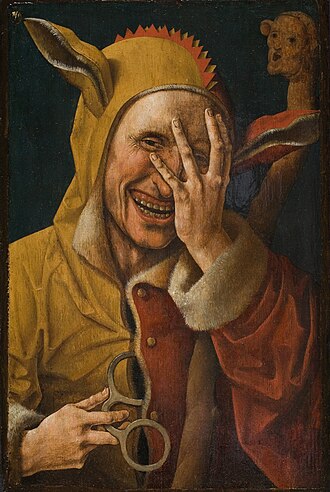
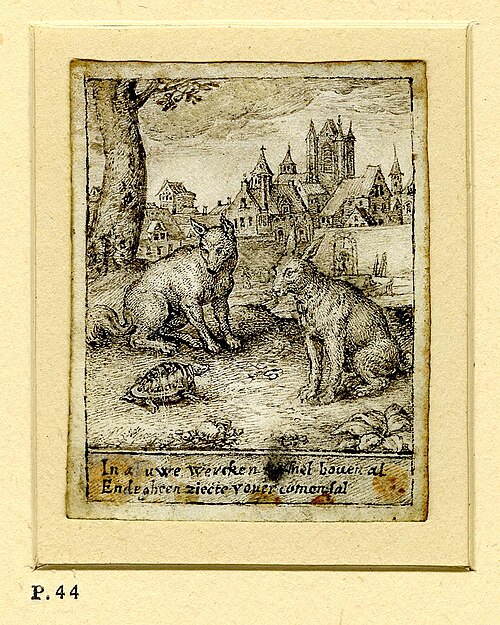
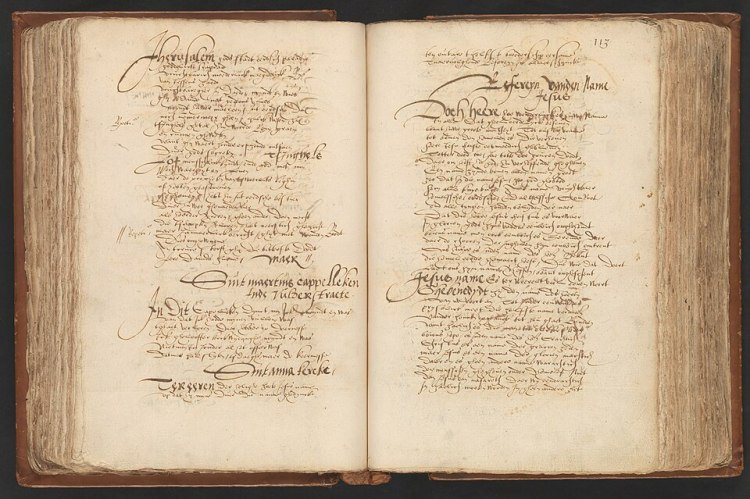
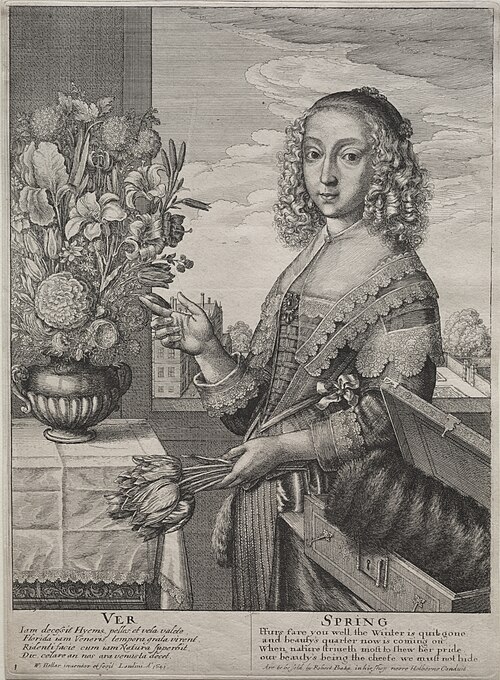




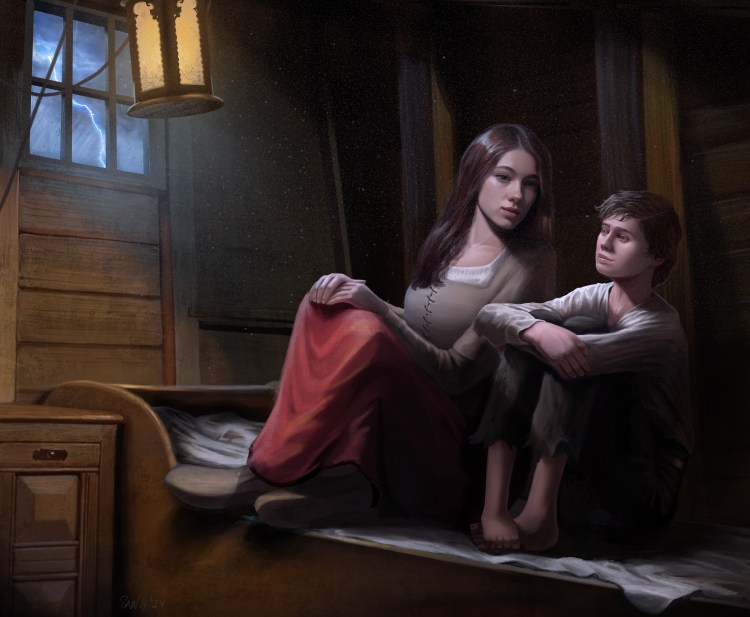


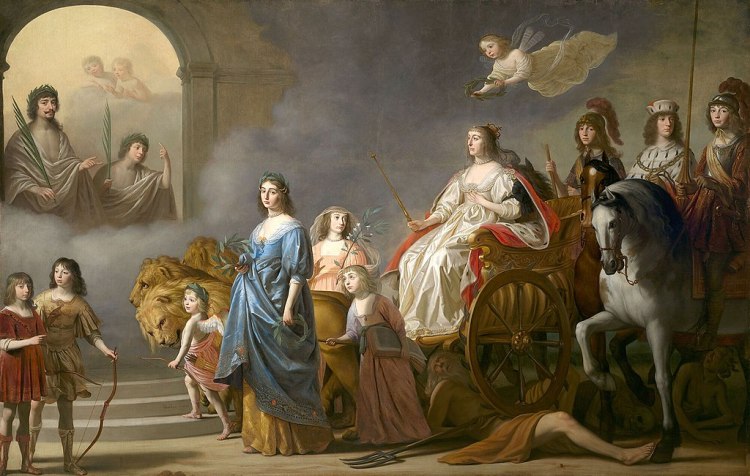

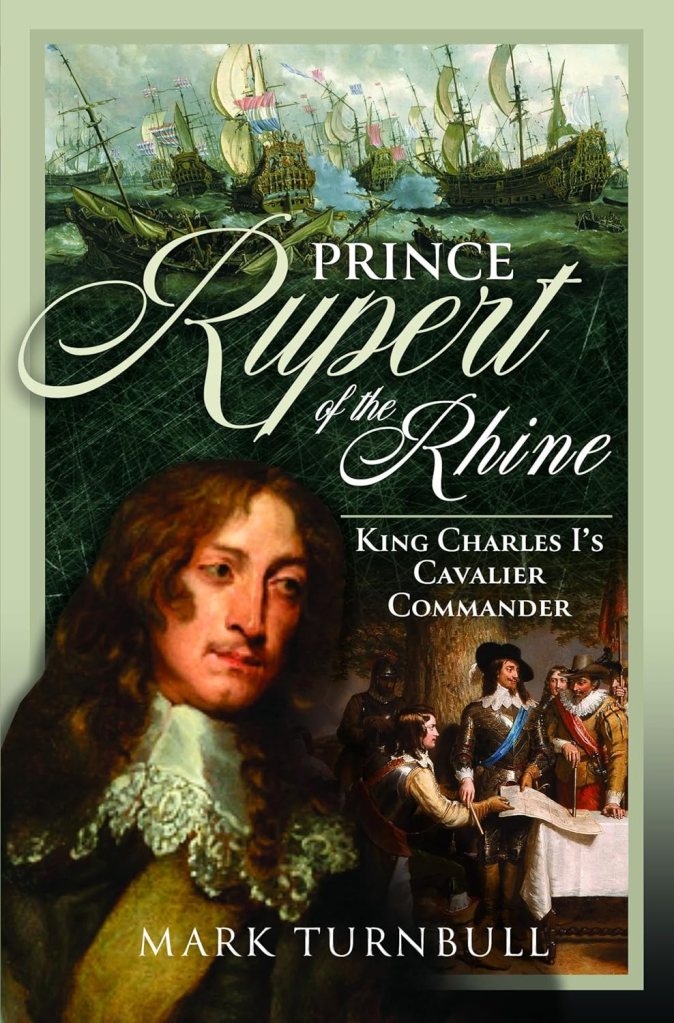



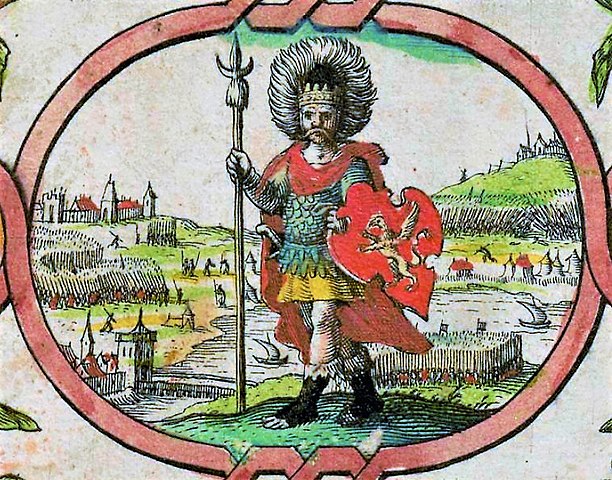
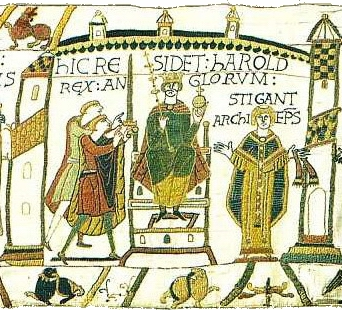

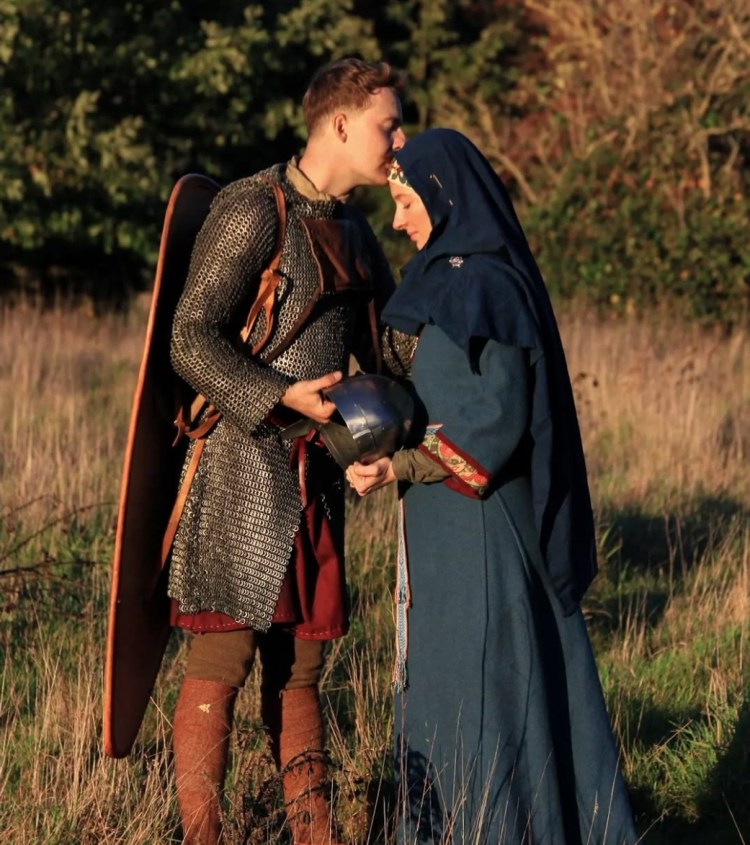

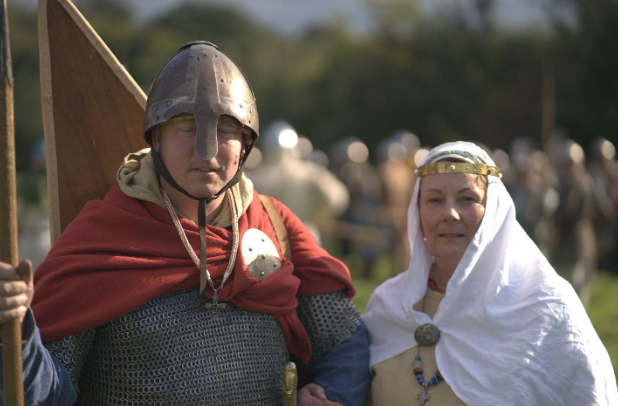
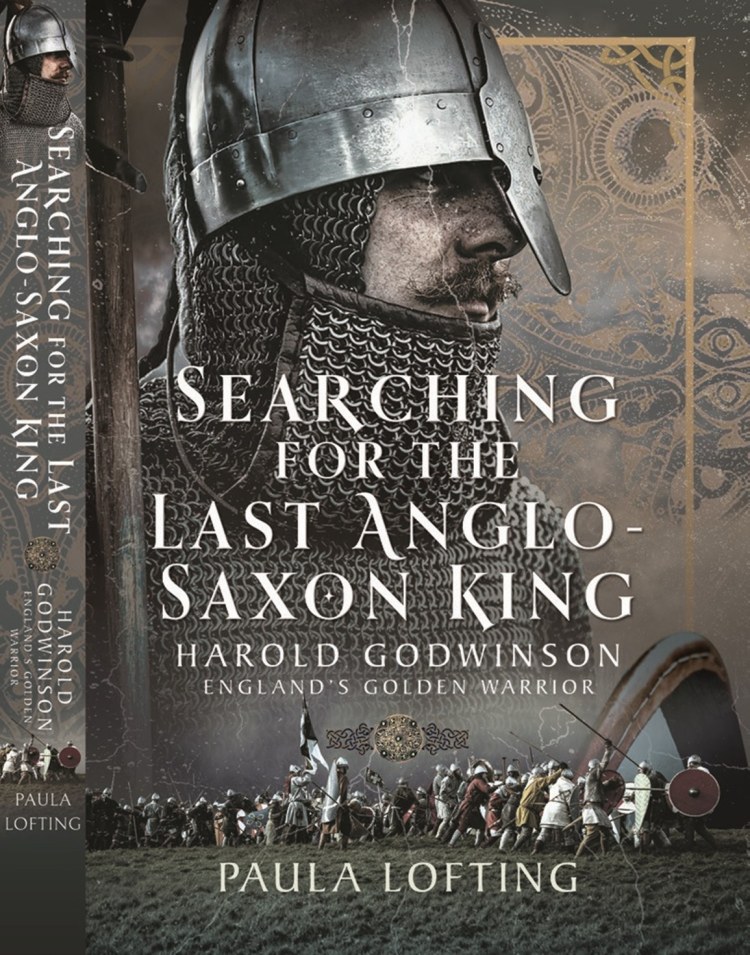
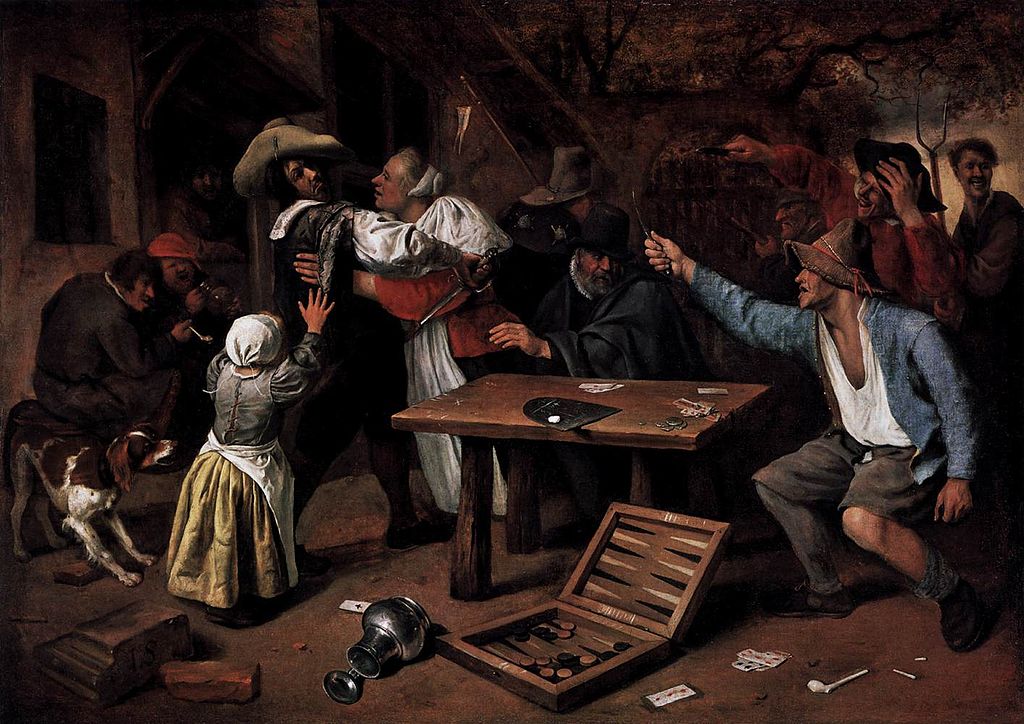
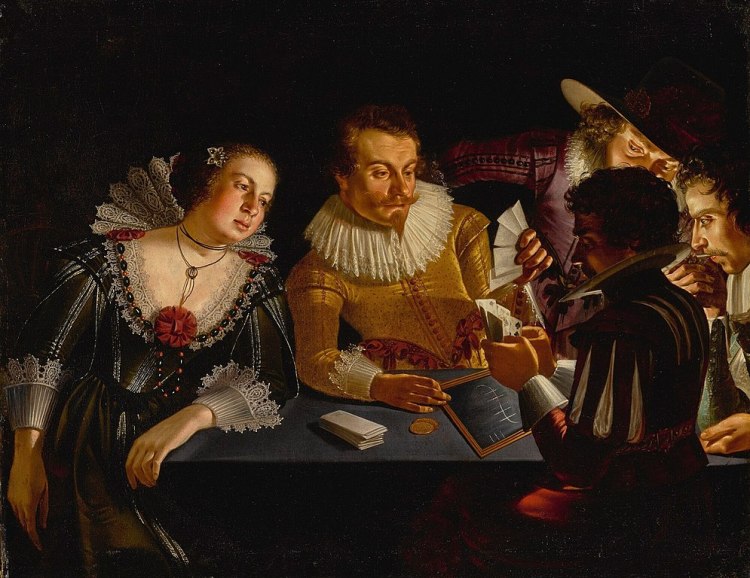
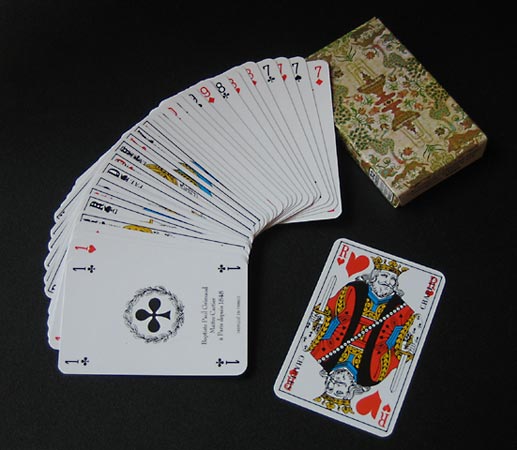
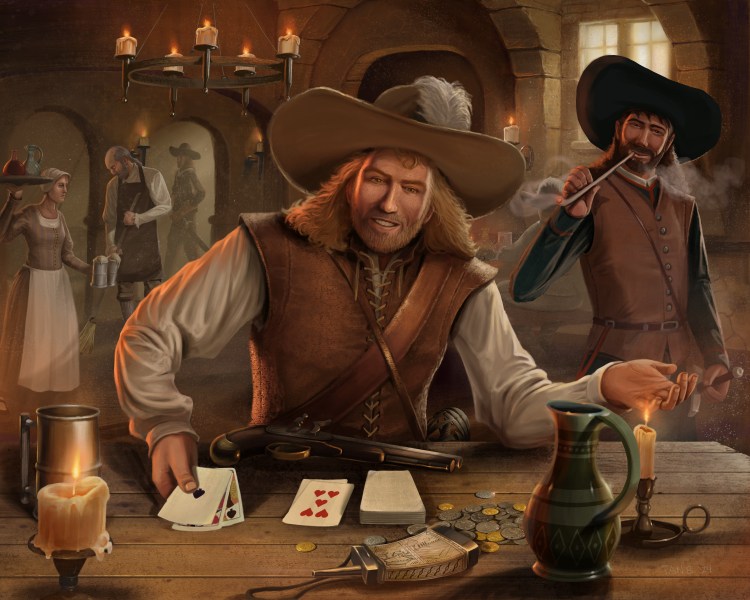

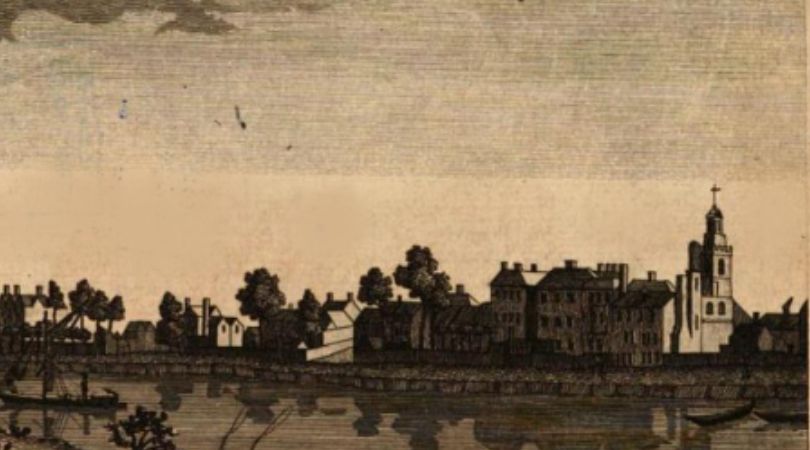


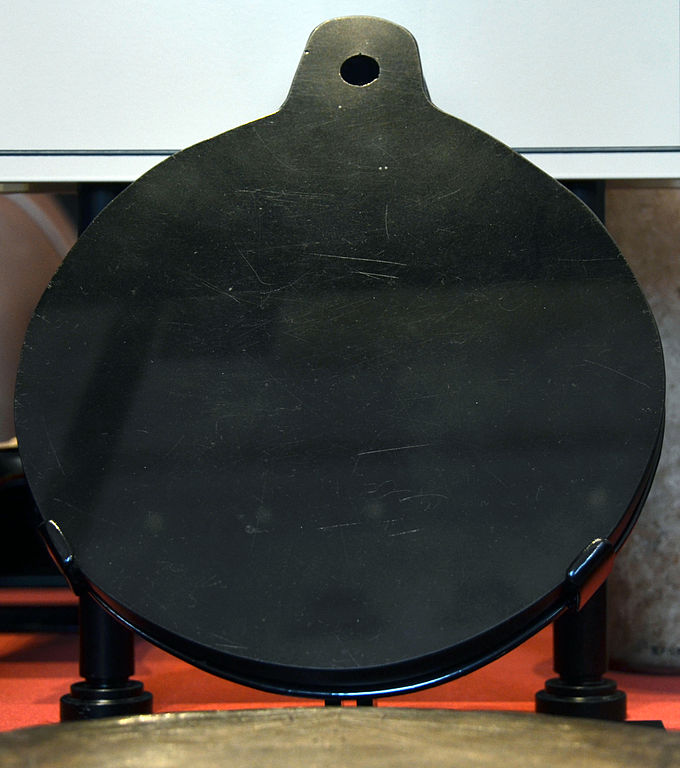
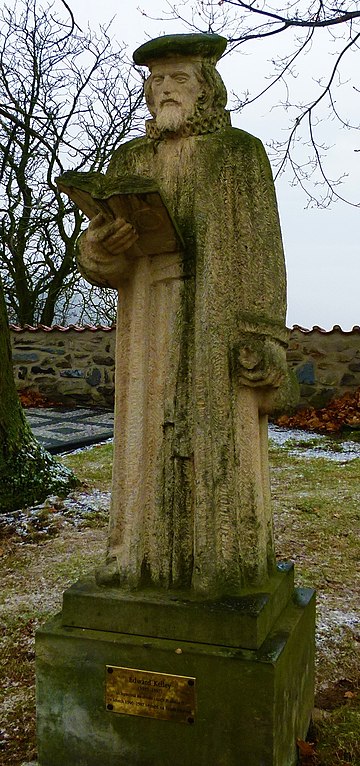
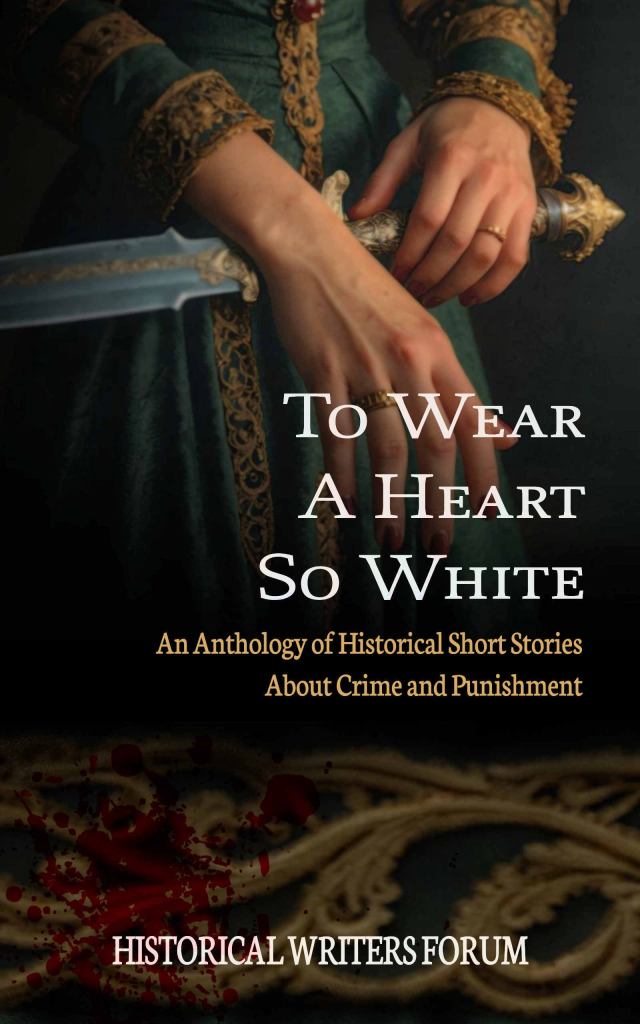
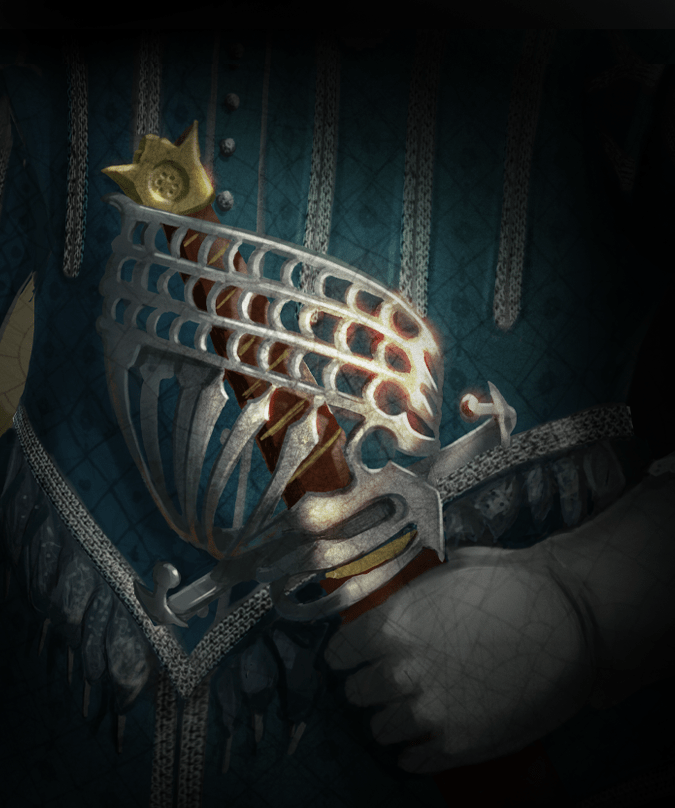

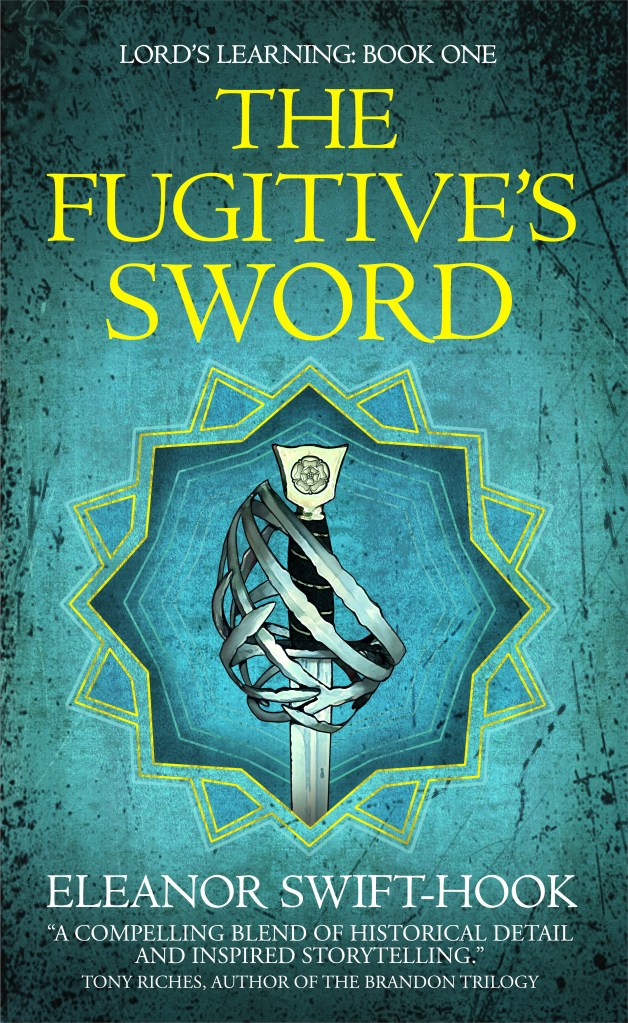

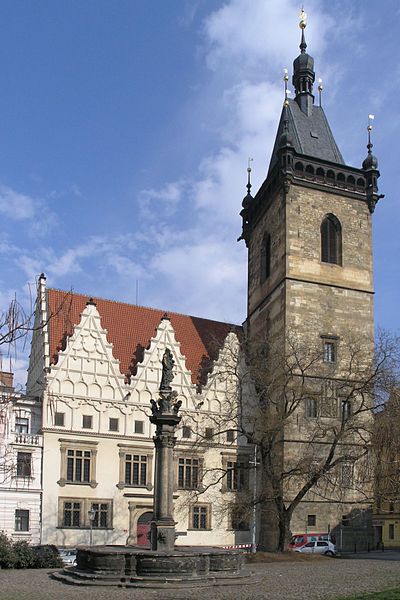
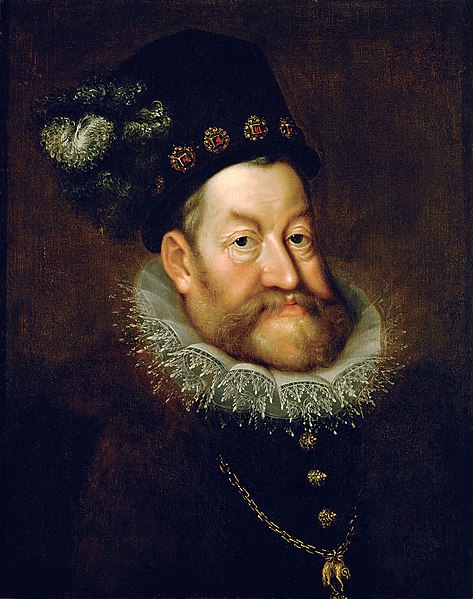
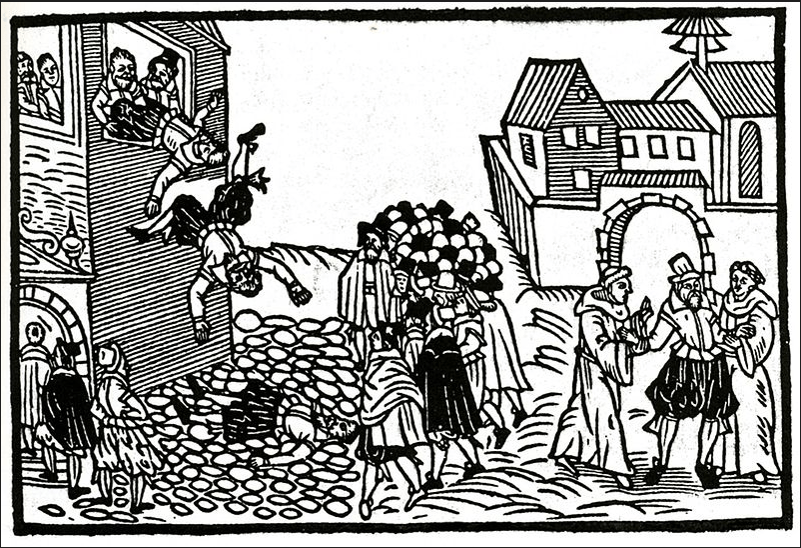
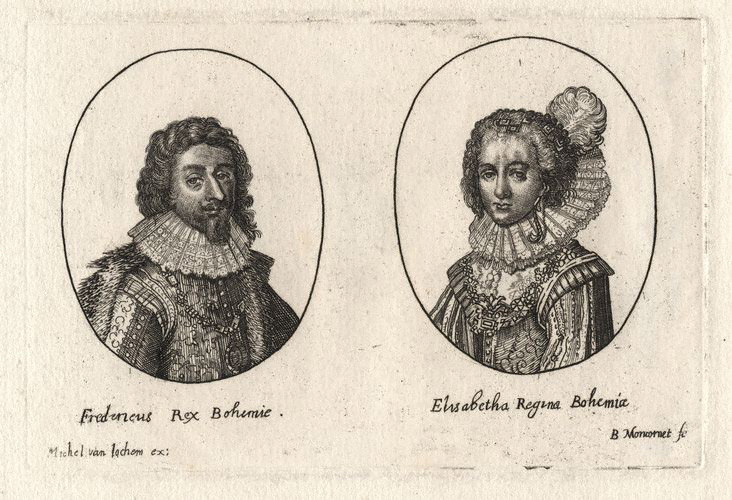




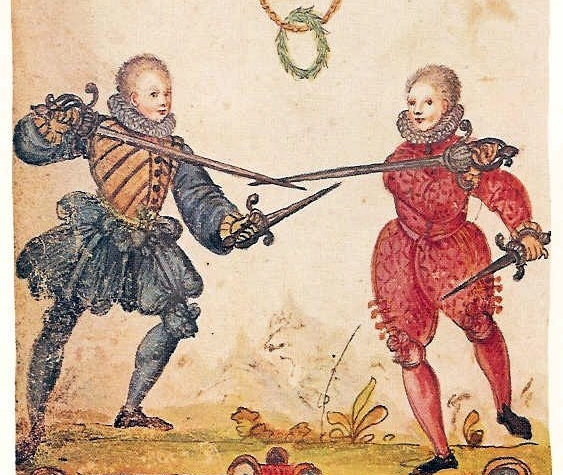


 Eleanor Swift-Hook


,_from_Les_Caprices_Series_A,_The_Florence_Set_MET_DP874422.jpg)