John Lambe was notorious. He called himself Dr Lambe, though there is no evidence he was ever qualified to claim the title, and was successful enough to be able to charge the modern equivalent of several thousand pounds for a consultation at the height of his fame. Despite his increasingly scurrilous reputation—including the charge of child rape—he basked in the protection of Buckingham. It is not so easy to separate the man from his dark myth today. At his trial for the rape in 1627, he angrily claimed it to be a political set up, but he was convicted and only his ties to Buckingham prevented his being executed for it. His death at the hands of a mob is not hard to understand when they believed he was a child-rapist who was getting away unpunished. There were any number of sensational tales told about him in his lifetime and following his death these continued to grow and carried ongoing tragic consequences. His servant, Anne Bodenham, was hung for witchcraft in Salisbury in 1653. At her trial she was accused of asking Lambe the date and nature of King James’ death on behalf of a lady she worked for before serving Lambe and he had told her that neither the king nor any of his children would come to a natural death.
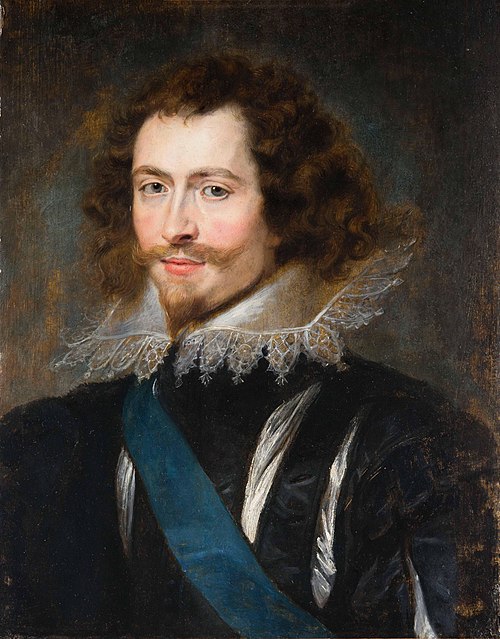
Peter Paul Rubens (1577–1640) via Wikimedia Commons
George Villiers, Duke of Buckingham, had achieved the impressive feat of maintaining his role as Royal favourite through two reigns. However following military defeats and an increasing perception of his enriching himself at the expense of the nation, he became widely hated by the English public. He was the one who was blamed for everything bad about the state of the nation. To what degree that was justified, I shall leave you to decide for yourself, there are several excellent books about him and he features in biographies of James VI/I and Charles I. But most will agree he was someone who was quick to take offense, a grudgebearer, intelligent, self-seeking and willing to use his influence to promote his family and friends, to the point of corrupting justice. I have unashamedly attributed deeds to him that are fictional and one or two others which are real but history would not lay at his door. He was murdered, pretty much as I describe it, by a disgruntled officer, John Felton who I have represented as he appears from the historical record. His account of Buckingham’s calamitous debacle on the Île de Ré is taken from history too.
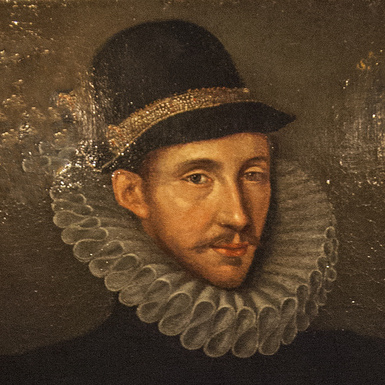
via Wikimedia Commons
Fulke Greville, Lord Brooke, is a historical figure who I have shamelessly woven into my fictional Covenant conspiracy and I have spoken about him elsewhere because of that. So here I shall focus on his murder, which need not even have been a murder had his physician been a more conventional man—indeed there is an argument that the name that should be attached to his killing is not that of Ralph Heywood, but of whichever physician advocated filling the knife wounds with pig’s fat. That inevitably went rancid and, equally inevitably, caused a fatal infection, leading the seventy-three year old to die in agony four weeks after receiving the wounds. Ralph Heywood allegedly committed the murder because he felt he was being slighted in Greville’s will and turned the knife on himself once he had stabbed his master.
George Eglisham is a fascinating character, who whilst he does not appear in this book, is present on almost every page. He was a Scottish Catholic convert who was at one point a Royal Physician to King James and much in his favour, having written in defence of the king. Keeping his Catholicism very much a secret, he was one of the leading lights of a small consortium who petitioned (and paid well) to gain the monopoly on producing gold foil. Once it was established in October 1619, he was a Master of the Goldbeater’s Company which brought him both status and a tidy income. Sadly for Eglisham, in 1621 the monopoly was rescinded as the Goldbeater’s patent became caught up in the desire of parliament to undo that of Buckingham’s gold and silver thread monopoly. That left Eglisham desperate for money and furious at the Villiers who seemed barely impacted by their own loss. There is some evidence to suggest that at this point, Eglisham teamed up with a sea captain, Edward Yates, and was indeed involved in coining Spanish gold while he lived in Bacon House.
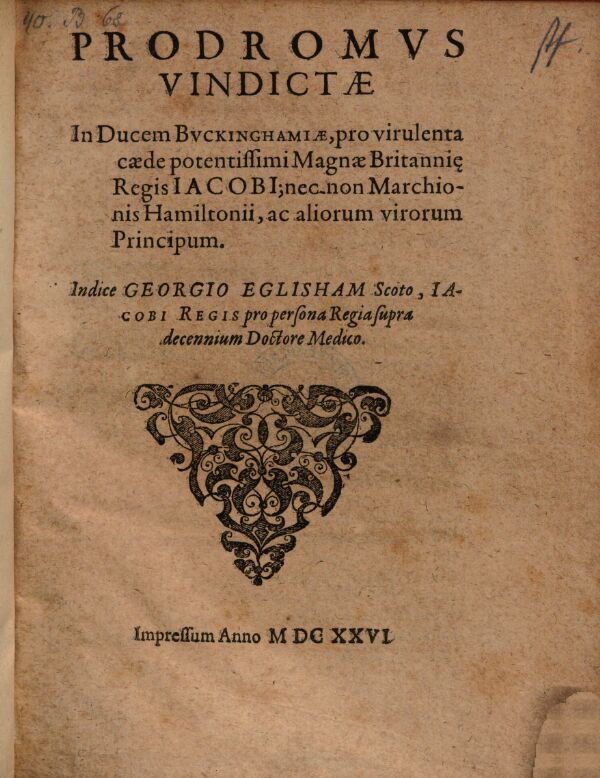
by George Eglisham, via Wikimedia Commons
In 1623 Eglisham made his worst mistake. At the time everyone was sure that Prince Charles would marry the Spanish Infanta, and the attitude towards Catholics was much more relaxed in London as a result. Eglisham admitted his Catholicism, seeing no harm in doing so. Two years later, King James, his Royal patron and sole potential protector was dead and England was going to war with Spain. Anti-Catholic feeling was on the rise and Eglisham had to flee England for the Spanish Netherlands. He was probably paid by Spain to produce his infamous libel The Forerunner of Revenge, and I doubt that neither he or his paymasters had the least notion of how successful and impacting it would be. It was a very clever fabrication, playing on fears and the growing popular dislike of Buckingham—and one which went on to cause issues for Charles I even into the civil war. Although no copy still exists in English dated to earlier than 1642, there is reference to such in a letter from 1626, so it is not unreasonable to assume it was available in English by 1628 when this book is set. It is uncertain when Eglisham himself died, with some sources suggesting he was murdered at some point between 1626 and 1628 and others that he lived until 1642.
Sadly, even today Eglisham’s writing muddies the historical record. Some popular historians keen to trade on the sensationalism of Eglisham’s claims, have tried to imply what he said was true. I find it very sad that a 400 year old conspiracy theory, clearly fabricated by a man with a grievance, is granted any status beyond that of being considered for its grim impact on the history of its time, and held up as an example of how such lies can have major real-world effects. I would advise avoiding such books and instead point the interested reader to Alastair Bellany and Thomas Cogswell’s superb book The Murder of King James I, to which I am indebted for providing me with so much of the background for The Turncoat’s Revenge.
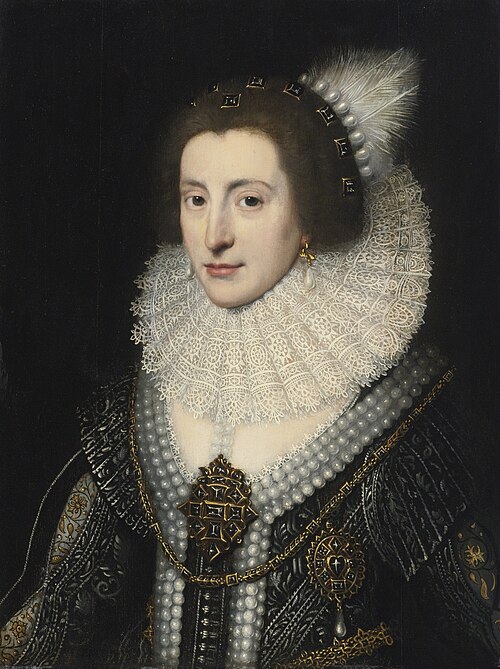
Workshop of Michiel Jansz. van Mierevelt (–1641)
via Wikimedia Commons
And a brief word about some of the women in this story. Elizabeth Stuart, Electress Palatine and exiled Queen of Bohemia is someone who features in passing or in cameo in most of these books due to Kate’s close relationship to her. I would like here to acknowledge my debt to Prof. Nadine Akkerman whose superb book Elizabeth Stuart, Queen of Hearts, which provided me with almost all I needed to know about her. I would recommend it unreservedly to anyone wishing to learn more about this fascinating woman who was once heir to the throne of England. Another fascinating woman opens this book. The account I give of Frances Villiers, Viscountess Purbeck, in the opening chapter is all true, including the cross-dressing escape, although it is not known where she actually stayed when she was in hiding out in London.
And talking of cross-dressing, Mal Markham or Mary Frith, was a real person and I doubt I have done her full justice here. She was infamous for dressing as a man and appearing on stage thus clad. She did indeed make her living for quite a time in the way I have described. She was also, allegedly, a high class pimp, providing young women for wealthy men, but also providing middle-class women with lovers. She was so notorious that there were two plays written about her in her lifetime one of which we still have today—The Roaring Girl by Thomas Middleton and Thomas Dekker. It seems her marriage to Lewknor Markham was one of convenience when lawsuits against her left her vulnerable as a spinster. Rumours of her adventurous life persisted into the civil war years when she reputedly robbed Sir Thomas Fairfax, shooting him in the arm in the process. Mal died in her mid 70s on Fleet Street in 1659.
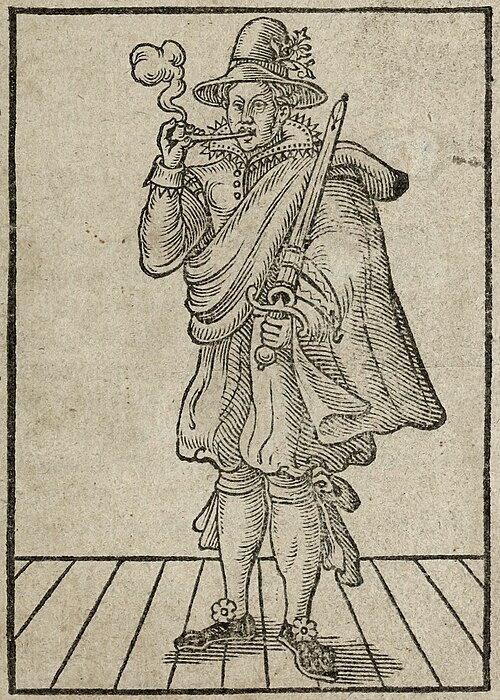
And finally, the delightful character Miranda Leeming is named after a competition winner, who was thrilled to be put in a book, but anything attributed to her is entirely my invention!

