Some interesting things about the book…
The original, working title, of this book, was The Buck’s Leap.
***
The Whipstaff
If you think of large sailing ships from this era, the odds are you will have in your mind images from pirate movies of the vessel being steered by a ships wheel. But in the Seventeenth Century that method had yet to be developed.
Instead, the man steering the ship would be using a device known as a whipstaff.
This was a pole which was attached to the end of the tiller in such a way that by pushing the pole in various ways the helmsman could direct the rudder.
However, most often the whipstaff was below the upper deck of the vessel and the man steering had little view of the way ahead, relying almost entirely on commands called to him.
Using a whipstaff was a very physically demanding job and required a lot of strength.
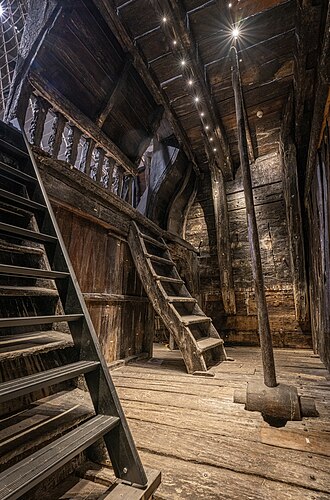
It is quite incredible to think that all the complex battle manoeuvres which individual ships and entire naval fleets of the time managed to execute, were achieved with such a cumbersome method of steering each ship.
***
The Fortune Theatre
The Fortune theatre was contemporary with other famous London theatres of this dramatic age, such as The Globe. Lying between Whitecross Street and Goldon Lane, and conveniently just outside the jurisdiction of the City of London. The original theatre burned down and was rebuilt in the early 1620s and was well known for putting on popular older plays rather than premiering new ones.
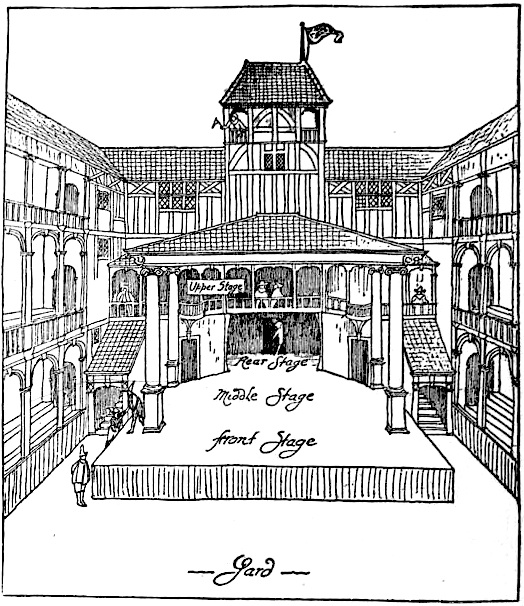
The Fortune had a bit of a reputation for rowdiness – this is the theatre where Mary Firth, who we meet Mal in The Turncoat’s Revenge, probably performed on stage against all conventions of the day. In 1626 there a major riot broke out there.
***
The Company of Maisters of the Science of Defence
This was indeed a genuine London Corporation. Founded by Henry VIII and with its charter confirmed by James I, it was supposed to hold a monopoly on teaching martial arts. But by the 1620s it was very much in decline thanks to both the rise of gunpowder and the breakdown of their monopoly.

Girard Thibault, Public domain, via Wikimedia Commons
You can read more about The Fighters’ Guild of Merry England in my blog post on the topic.


